Back in November, it was reported that Intel (NASDAQ:INTC) may be working to win some modem design and production for the Apple (NASDAQ:AAPL) iPhone series, and that it may also be working on the future A10/A11 SoCs.
In another rumor, it was reported that the company was working on the LG (OTC:LGEAF) Nuclun 2, which points at the fact that Intel is making tests for the application processor (AP) market.
 Click to enlarge
Image Credits: AppleInsider
But things have changed recently, putting Intel in a different and really a better position as regards the mobile hardware market (modem, application processors and WiFi/BT maybe), while Qualcomm (NASDAQ:QCOM) is under threat.
Intel's iPhone Modem Design WinIt has been reported that the company has probably won the 30-40% of the next iPhone 7 modem production, mainly for those markets where CDMA is not required. It is possible that Intel modems could also be supplied for the upcoming iPhone 5SE, even though it would be quite difficult due to the timing (but not impossible).
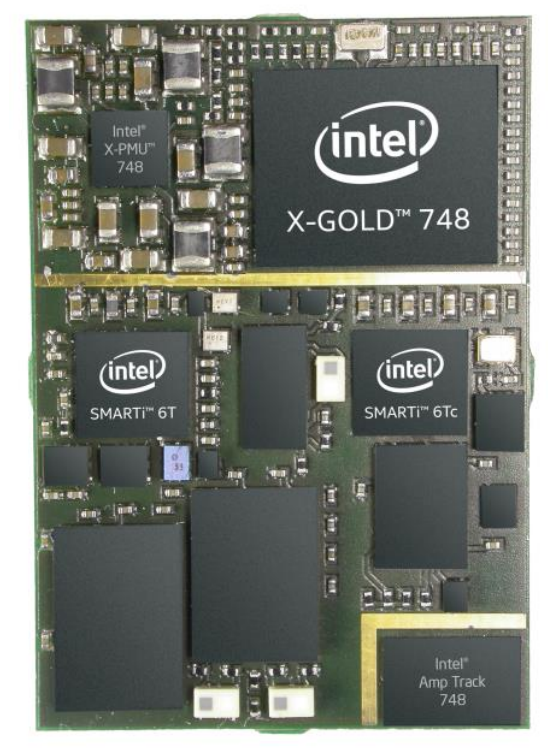
Image Credits: Nexus Update
But which modem is it? Considering that 1000 people are working on this modem, it is very difficult to see a simple XMM 7360 inside future iPhones, since it is already commercialized and is designed at 28nm, meaning that it would have a great disadvantage against the 2016 Qualcomm counterpart. As regards the speed concerns, the declared speeds are not achievable by any carrier, which means that it is not the main discriminating factor.
It would make a lot more sense to have an updated XMM 7360 or XMM 74X0:
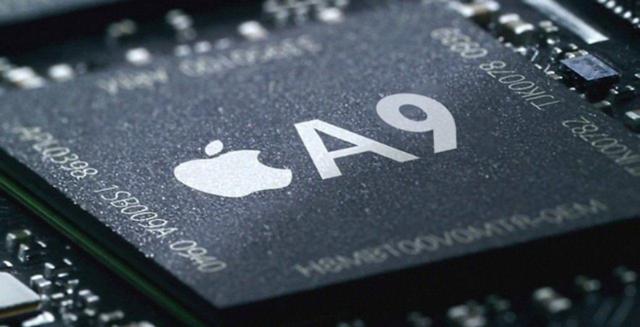
The XMM 7360 at 28nm may still make sense if it is confined to the iPhone 5SE, but considering that this smartphone is likely to mount the A9 SoC (16 nm), the adoption of a 28nm modem still doesn't make so much sense (while the previous two Qualcomm modems were built using 20nm node). Besides, the iPhone 5SE is rumored to be released this month, making the Intel modem adoption quite difficult.
Greater Chance To Get APs TooThe modem design win may also translate into additional business related to the future iPhone 7S, which is set for release in late 2017. Taking for granted that the A10 will be produced by TSMC (NYSE:TSM), the A11 remains an open challenge:
 Click to enlarge
Image Credits: SpazioTech
In my opinion, Intel may also infiltrate another Apple supply market: the WiFi/BT combo chip and the relative power management chip. The company is already working on switching its chip production towards the 14nm node, so a combo chip joint with the XMM modem could be a feasible solution. Maybe it won't make it for the iPhone 7, but the iPhone 7S (or Pro) will likely be the right device to see a WiFi/BT combo chip from Intel.
Thus, there are various reasons for Apple to change its supply policy, and Intel is particularly attractive right now.
Intel's Overall PictureAs I have already shown in the past, Intel's overall picture is a larger one:
The scenario is very wide, and the company is improving and preparing different approaches to strike both the low/mid-market and the high-end market.
TakeawayCLSA states that modem supply will bring 1.5-2.0% of revenues and earnings to Intel, while Qualcomm will lose -4.0% of revenues and -2.0% of its earnings.
For what concerns Intel, 1.5-2.0% of revenue would translate into $830-1100 million, but if the company able to sell even its WiFi/BT combo chip and the relative power management module, the revenues would increase by 2.4-3.1%, or $1290-1720 million.
And what if Apple entrusts the A11 production to Intel? If we consider a supply of the 30-40% of actual iPhone sales, Intel would generate revenues for an overall 4.7-6.3%, or $2610-3480 million. Obviously, if the entire production was entrusted to Intel, the overall revenue increase would go beyond 15%, or $8 billion. Such an increase, driven by a sole customer in the mobile sector, would be great for Intel, which is still struggling in the mobile market.
On the other hand, Qualcomm would be hit, seeing its revenue market crash by 4-35% (depending on which kind of deal Apple and Intel will make in the months and years to come). TSMC would face a similar fate, since it produces all the Qualcomm products used by Apple.
It is quite peculiar how a single product, given the specific situation, may trigger a lot of market changes. Intel is posed to surge in the mobile market, but it all depends on its capacity of winning some design for a tier-1 smartphone. If the company able to do it, the low/mid-end strategy (SoFIA) will be a great help in infiltrating every end market.
Disclosure: I/we have no positions in any stocks mentioned, but may initiate a long position in INTC over the next 72 hours.
I wrote this article myself, and it expresses my own opinions. I am not receiving compensation for it (other than from Seeking Alpha). I have no business relationship with any company whose stock is mentioned in this article.
Additional disclosure: The author does not guarantee the performance of any investments and potential investors should always do their own due diligence before making any investment decisions. Although the author believes that the information presented here is correct to the best of his knowledge, no warranties are made and potential investors should always conduct their own independent research before making any investment decisions. Investing carries risk of loss and is not suitable for all individuals.
Editor's Note: This article discusses one or more securities that do not trade on a major U.S. exchange. Please be aware of the risks associated with these stocks.
Source: Tier-1 Smartphone Ramp For Intel

No comments:
Post a Comment