Tuesday, 28 February 2017

All the phones we saw at Mobile World Congress 2017

There's a long list of new phones to be excited about.

Mobile World Congress has always been a fantastic place to get an early look at many different phones that aren't quite here to buy yet. Every year is a little different, but the general theme is the same. Our team on the ground has run from meeting to meeting in search of all the great new phones to share with you, and this year that list is pretty great.

Take a look at all of the phones we've spent time with so far!

BlackBerry KEYone
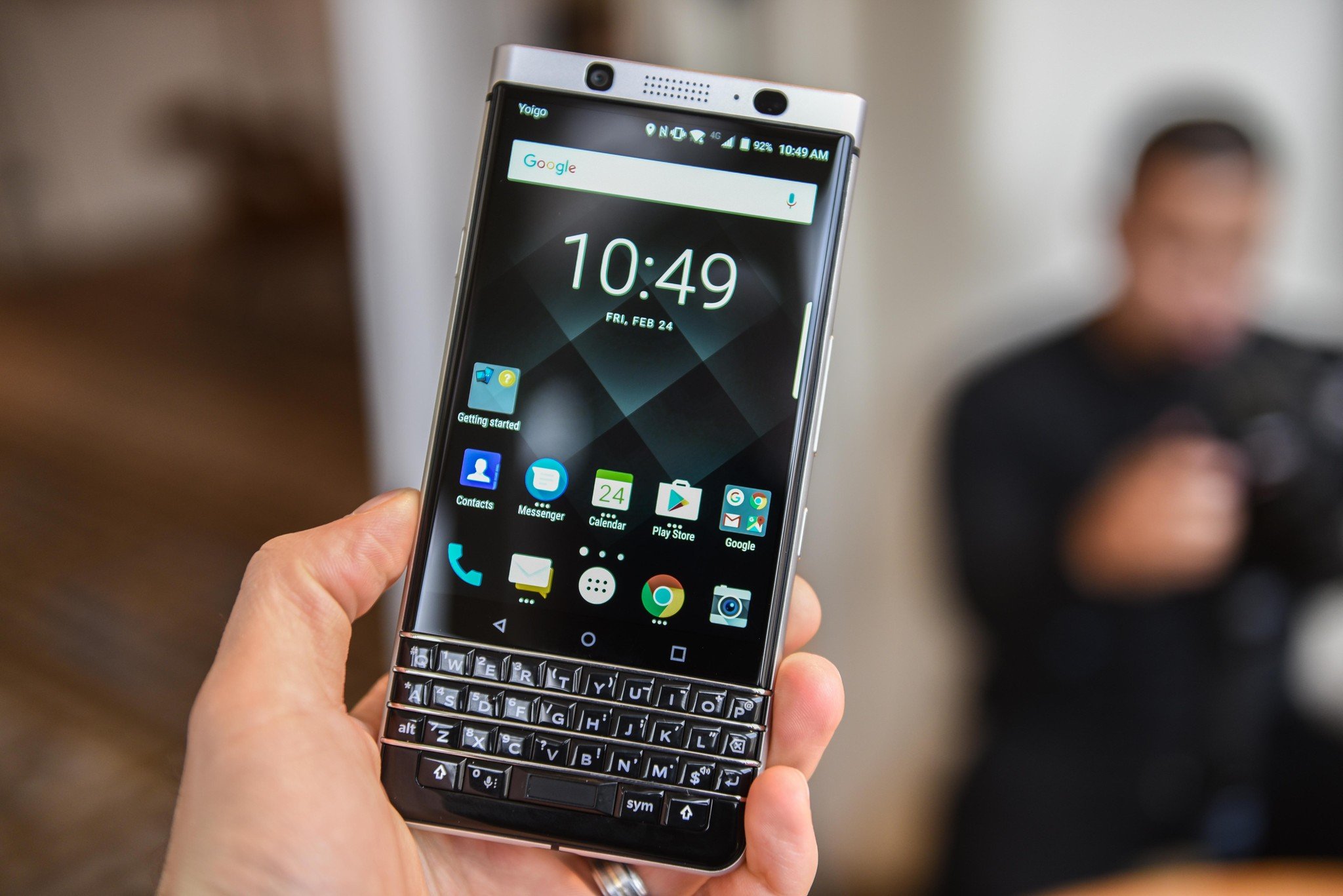
BlackBerry KEYone

BlackBerry is dead. Long live BlackBerry Mobile! The new brand has made a big splash by focusing on the things that everyone remembers BlackBerry phones being great at, while remaining modern and interesting. This is the phone we saw back at CES codenamed Mercury, and now we have a lot more information and some real time to get to know the new KEYone.

Check out our hands-on with the BlackBerry Mobile KEYone!

LG G6

LG G6

As the big brand on campus this year, and after such a problematic launch last year, LG's G lineup badly needed a hit. The new G6 has kicked the modular habit, ditched its Friends, and is really just focusing on itself right now. It's the first phone from LG in a long time to rock glass on both sides, and rocks an unusually tall display to pack in more information and look pretty slick in the process.

Read our LG G6 initial review!

Sony Xperia XZ Premium and XZs

Sony Xperia XZ

There are no other phones out there right now that look quite like a Sony phone. The Xperia lineup has always had a unique thinness and style to it, but the new XZ Premium and XZs continue the trend of mirrored finishes, anodized aluminum and ridiculously high resolution displays. They are both exciting phones, but U.S. buyers will continue to be disappointed by the lack of a fingerprint sensor.

Take a look at our hands-on with Sony's new Xperia phones

Moto G5 + Moto G5 Plus

Moto G5

Lenovo is keeping its promises and the Moto brand remains alive and well. On top of a look at some [great Moto Mods](http://www.androidcentral.com/motorola-launching-alexa-powered-speaker-moto-mod-amazon in development and in funding stages, we also got an extended look at the new Moto G5. The budget Moto phones have always been great for pushing the envelope on quality for the price, and this new version continues to uphold that standard. It's an early breakaway for the top spot for best budget phone this year, and it's only February!

Our Moto G5 hands-on lives right here!

Alcatel A5

Alcatel A5

You can always count on Alcatel to bust out something quirky that no other company would dare do. Last year, that thing was making the box to its phone a VR headset. This year, Alcatel is taking modularity to the budget space with replaceable backs that offer all sorts of new features. It's not clear just how useful some of these replaceable backs are just yet, but the phone still manages to look great no matter what is connected to it.

This Alcatel A5 looks like it is on fire

Nokia 3, 5, and 6

Nokia 3

That's right, we get a new BlackBerry and new Nokia phones this year. And they run Android! Neither of the three phones have particularly clever names, but the numbers are easy enough to remember. The Nokia 3 is a 5-inch low-end phone, the Nokia 5 is a 5.2-inch budget phone, and the 5.5-inch Nokia 6 looks like a decent mid-range experience. See, not confusing at all!

Check out the Nokia 3, 5, and 6 hands-on all together

Huawei P10 and P10+

Huawei P10

Last, but in no way least, the Huawei P10 showed up and was shown off as a great mid-range experience while the P10+ is clearly built for people who want everything in a phone. The Kirin 960 internals are exciting, but Huawei is grabbing everyone's attention with a huge array of color options for the body. This phone comes in many different variants, and will not be headed to the U.S. at all, so take a moment and be thoroughly jealous at how spoiled for choice everyone else is with this phone.

Read more for details on the Huawei P10 and P10+


Source: All the phones we saw at Mobile World Congress 2017

3 Must-Have Smartphones Debut at MWC 2017

While we saw the latest in televisions and smart appliances at CES, Mobile World Congress is all about smartphones. MWC kicked off with new smartphones from several big brands, including LG, Motorola and Sony. This year, we're seeing more high-end models with HDR, with water resistance is coming to an increasing number of phones — both features we're glad to see in this year's mobile lineup.

So let's check out the latest in this year's smartphone lineup.

LG G6

With the G6, LG is trying to make a big phone that doesn't feel like a big phone. The 5.7-inch Android Nougat smartphone has a 18:9 aspect ratio compared to the 16:9 aspect ratio of a standard smartphone, making it a bit narrower than you're used to. Physically, it measures 5.8-inches long by 2.8-inches wide, compared last year's 5.7" LG V20 which measures at 6.3-inches long by 3.1-inches wide. Despite — or perhaps because of — its odd size, it's easy to hold, with the width making it particularly easy to handle for those with smaller hands. It scored highly in ergonomics testing by Pennsylvania State University, which gave it top marks for comfort.

The phone's size puts it closer to the aspect ratio of a movie screen, which can make for a more cinematic video experience. The high-quality screen also makes it a great phone to watch video on. The QHD+ display has a pixel density of 564 PPI, plus Dolby Vision and HDR 10 support. Combined, that means the screen shows super crisp images with a wide range of vibrant, true-to-life colors for outstanding picture quality.

For anyone who fancies themselves a smartphone photographer, one front and two rear cameras allow you to take ordinary or wide-angle shots whether you're taking selfies or capturing landscapes. The front cameras capture images at 13MP, and the wide-angle lens has a 125-degree view and reduces edge distortion for more natural images. The front-facing camera is 5MP and can capture a 100-degree view — again, without distorting the image edges.

Like most of this year's phones, The G6 is water-resistant. It's IP68, which means you can drop it water up to 1.5-meters (just under 5-feet) deep and leave it there for a half hour without trouble. We've spent years being afraid of splashing — or, worse, dropping — our phones while taking photos by the pool, and water resistant adds a lot of security. (Just be sure you don't drop it in the deep end of the pool.)

The G6 is due out in Korea in March, selling for just under $800. There's no official US release date, but expect it this spring.

Sony Xperia XZ Premium

Sony Xperia XZ Premium

Sony's latest Xperia is another Android Nougat device, and it aims to give LG's V20 a run for its money in screen quality. The 5.5" 4K HDR screen is a full 801 PPI for images that are just as sharp as anything you'll see in real life. Though the V20 bests it on HDR performance, the Xperia makes a strong showing.

Sony is leveraging its experience in making cameras to provide one of the best smartphone cameras you'll find — making good use of the XZ's high-resolution screen. The 19MP sensor for catching every detail with perfect clarity, offering crisp images even in poor lighting conditions. But the camera's most impressive feature is video, which it can capture at 960 frames per second at 720p resolution for super slow motion video. You won't find that on any other smartphone camera.

The Xperia XZ is the first announced phone to use the top-of-the-line Snapdragon 835 processor, which is 27% faster than its predecessors but uses 40% less battery power. It's power the Xperia XZ needs to play video and games at 4K resolution, but it still makes the phone one of the fastest on the market. The LG G6 uses the older Snapdragon 821 processor, and while Samsung's next flagship phone is expected to use the 835 as well, Samsung hasn't announced it.

As we've come to expect with high-end smartphones, the XZ has IP68 dust and water resistance (just like the LG G6), so a dip in the pool isn't a problem. And, while Sony makes no battery life promises, we suspect the phone's large 3,230mAh battery combined with the efficient Snapdragon 835 processor will deliver at least acceptable battery life.

Unfortunately, we don't yet have a price or release date from Sony — so you may not be able to get your hands on the Xperia XZ Premium any time soon.

Moto G5 Plus

Moto G5 Plus

If you don't want to spend $800 on a smartphone, we completely understand — and so does Lenovo. While the company's Moto G5 Plus doesn't sport the high-quality screen of LG's top-of-the-line G6, it's a perfectly serviceable smartphone for its under $300 price. The Moto G5 Plus will sell for $229 (32GB) or $299 (64GB), and offers more features than other phones in this budget-friendly category.

This 5.2" Android Nougat smartphone has a metal body — compared to the previous generation's plastic body — which gives it a high-end look for a low-end price. The screen is a reasonable 1080p, which is perfectly sharp, but lacks the rich colors of the HDR screens you'll find on top-tier phones. A fingerprint scanner below the screen can also be used for gesture controls: just swipe left or right to go forward and backward. A 3,000mAh battery gives the phone what Lenovo calls "all day battery life." Most smartphones fall short of such promises in practice, but the G5 uses TurboCharge to give you 6 hours of battery power in just 15 minutes, so you can recharge quickly if you need to. All in all it's a very solid set of features for a relatively low-cost smartphone.

The phone's camera, however, is genuinely impressive, with specs that rival cameras on much more expensive smartphones. The rear-facing camera is 12MP with an f/1.7 aperture for better photos in low light and a speedy autofocus so you never miss a shot. It misses fancier features like image stabilization, but, again, it's better than anything else you'll find at this price.

While we don't have an exact date, the Moto G5 Plus should hit store shelves sometime in March.

What else?

Also announced at MWC are a couple of blasts from the past, with Nokia's retro 3310 feature phone ($52) and BlackBerry's KeyOne ($549), the first smartphone we've seen in a while with a physical keyboard. Will these classic styles make a comeback? We'll see.

You've probably noticed a couple of big brands missing: Samsung and Apple. Both tend to hold their own announcement events. Expect more on Samsung's newest models at its Unpacked event on March 29, while Apple's new iPhones are typically announced in the fall.

[Image credits: LG, Sony, Lenovo]


Source: 3 Must-Have Smartphones Debut at MWC 2017

Monday, 27 February 2017

Offline AI revolution awaits smartphones

New smartphones will use AI to carry out tasks

The smartphone revolution is poised to go onto the next level—with "superphones" equipped with artificial intelligence now on the horizon.

By learning their owners' habits, these new phones will be able to carry out tasks even when they're offline.

During a first phase only high-end smartphones will use the technology, like the new models unveiled by China's Huawei at the Mobile World Congress, the phone industry's largest annual trade fair, which opened Monday in Barcelona.

But the technology is quickly gaining ground.

More than 300 million smartphones—or roughly a fifth of units sold worldwide—will have the function in 2017, according to Deloitte.

"It is one of the key areas we are investing in. After the smartphone, we will have the 'superphone' thanks to artificial intelligence," said Vincent Vantilcke, marketing director for Huawei in France.

South Korea's LG and Finland's Nokia both announced in Barcelona that they would use Google's voice assistant—which uses artificial intelligence to answer users' questions—in their newest handsets.

"Every big company in the sector is investing all their research and development on this," Gartner analyst Annette Zimmermann said.

Today most smartphones run their applications by consulting data stored in external servers, known as the cloud.

But the arrival of faster processors will allow smartphones to use data already stored on the device—much like a human brain does to translate words or recognise images.

Phone makers want to seduce new buyers with AI functions

"You teach a computer to analyse specific data, make sense of this data and act on it," Zimmermann said.

'Another revolution'

In the future "smartphones will almost make a decision before you do. When you go somewhere, it knows where you want to go" based on your usual habits, said Dexter Thillien, an analyst at BMI Research.

California-based start-up Neura has developed a system of artificial intelligence that can decode a smartphone user's daily patterns of behaviour.

To do this it combines data gathered by the handset's GPS tracker, the speed at at which the phone owner is walking and other elements with algorithms.

It then generates insights about users' past and present actions and predictions about what they will do next.

Neura says its technology can be used to enable smarter healthcare, cars, music services and homes by constantly updating their portraits of user behaviour patterns.

With the new technology, a smartphone will be able to know whether its owner is "running to catch a bus or because he is jogging", said Neura head Gilad Mieri.

The phone can then wait for the right moment to send its user a notification—for example a reminder to take medication.

Machine-learning enhanced phones will focus mainly on voice recognition, translation and image recognition, said Ariane Bucaille, a tech specialist at Deloitte.

Superphones will perform tasks without connecting to the internet

This will enable a smartphone to give a user directions without an internet connection, she said.

Smartphones with artificial intelligence "will play an even more crucial role in people's lives. It is another revolution", Bucaille said.

Where's the profit?

At the moment, the new technology is still being developed.

"Where the profit comes from, that's still a big question," Gartner's Zimmerman said.

Further down the line, tech firms plan to use AI in other products, such as driverless cars, Thillien said.

However, privacy concerns may throw up a roadblock to the technology.

A new European Union data protection law which comes into effect in 2018 contains "very restrictive" rules to prevent algorithms from making decisions on their own, Thillien said.

But Bucaille argues that smartphones with AI are actually safer because they do not store information on external servers.

This may ultimately act as a disincentive for tech firms to develop AI for smartphones, as their business models so often rely on gathering and using data from users, said Mouloud Dey, director of innovation at SAS in Paris.

Explore further: Phone firms turn to artificial intelligence at top mobile fair

© 2017 AFP


Source: Offline AI revolution awaits smartphones

Everything you need to know about Nokia's 3 new smartphones

HMD unveiled four new phones at Mobile World Congress (MWC) on Sunday, launching the notorious Nokia name back into the mobile industry.

The outlier of the four is the Nokia 3310, an homage to one of the most respected devices in the business and a message to everyone that the brand intends to pick up where it left off.

As delightful as it is to see the rebirth of such an infamous device, it's the other three smartphones the Finnish company will hope can compete against the likes of Samsung and Huawei. The company appears to be doing what Nokia has always done best: focusing on hardware and letting pure Android Nougat (aside from the camera app) take care of the rest.

Here is everything you need to know about the first lineup of phones from the new Nokia.

Nokia 6

Released earlier this year for China, the Android-powered Nokia 6 will now be available globally. The already popular device instantly sold out during its first launch, receiving 1.3 million pr e-orders in the first four days on the market.

Its design sets the tone for Nokia's other devices. We think it looks sharp overall, with a bit of a Galaxy Note 6/7 look in the front and some Lumia 900 series in the back.

Nokia

You are probably wondering if you should expect the Nokia durability of old. HMD claims its "precision-milled" aluminum will give the 6 some added toughness, and a Gorilla Glass-covered screen should do a decent job preventing scratches and other damage. Just don't expect it to survive as many drops as the practically invincible Nokia brick phones.   

The 6 sports the largest screen in Nokia's inaugural lineup of Android smartphones, at 5.5 inches. The mid-tier device features a full-HD (1080p) panel, Qualcomm Snapdragon 430 processor capable of 1080p video playback, and LTE connectivity.

Nokia

It comes with 3GB of RAM and 32GB of storage, which can expand to 128GB via a microSD card. A hefty 3,000 mAh battery sits under the hood, but no word on run time just yet. Oh, and it's got a headphone jack and fingerprint sensor.  

Nokia made a name for itself when it comes to producing quality cameras back when it was struggling to sell its mostly excellent Windows devices. The 6 model will try to replicate previous success with an f/2.0 16-megapixel snapper on the back and 8-megapixel selfie lens on the front.

The company is touting its 'dual amplifier' speakers, which it claims will be 6 decibels louder than normal speakers.

The Nokia 6 will come in several different colors (matte black, copper, blue, and silver), and is set to be released in spring this year for €229, or about $242. A Nokia 6 R special edition with a gorgeous 'arte' black finish, 64GB storage, and 4GB memory will cost €299, or $316. 

Nokia 5

The Nokia 5 is very similar to t he 6 with only a few notable differences. The more compact 5 comes with a slightly smaller and lower resolution (1280 x 720) 5.2-inch display and only 2GB of RAM.

While it also supports 128Gb of microSD card storage, it will ship with only 16GB pre-installed. Its 13-megapixel rear camera appears slightly less powerful than the one on the Nokia 6, at least on paper.

Nokia

The rest is about the same. The nearly identical-looking devices run on the latest Android OS, are powered by a mid-tier Qualcomm 430 processor, sport a fingerprint sensor, and should get through a day on a single charge (especially the Nokia 5 with its lower res screen) with their 3,000 mAh batteries.

In true Nokia fashion, the low-price Nokia 5 is made of a single piece of aluminum, and its screen is coated in Gorilla Glass.

It will also be released in the second quarter of this year and cost €189, or $200.

Nokia 3

For those on a tight budget, there is the Nougat-powered Nokia 3, which follows the design language of its larger siblings.

Nokia

However, unlike the 5 or 6, the 3 is made of an aluminum core and polycarbonate shell, a material the Nokia name has a lot of experience with. It features a 5-inch 720p display, 2GB of RAM, MediaTek 6737 chipset, 16GB storage up to 128GB via a microSD card, and 8-megapixel front and rear-facing cameras.

The rectangular device is powered by a slightly smaller 2650 mAh battery and does not include a fingerprint sensor.

The 3 model will cost just €139, or just under $150, and should become available alongside the others. 

Availability 

Nokia will launch all three devices sometime this spring, with different countries receiving different release dates and specs. Chances are, you'll be able to purchase one sometime this year. HMD claims it will sell its new phones in more than 120 countries from more than 500 partners, according to CNET. 

HDM seems to have done a good job staying true to the Nokia name by focusing on durability, camera quality, and value. 

We'll only have to wait a few more months to find out if these new devices give us the same feeling as the legendary ones they follow. Until then, HMD will let you register your interest in each of the phones on its site today. 


Source: Everything you need to know about Nokia's 3 new smartphones

Sunday, 26 February 2017

HMD unveils 3 Android smartphones in Nokia clothing

Nokia, the mobile phone brand that arguably created as well as led the mobile phone market for many years, once died a tragic death, first the victim of its own arrogance at being the early leader; then the victim of Apple and Google and their domination in smartphones; and then dealt the final blow by Microsoft, who acquired it but failed badly at trying to resuscitate the brand in its own form.

Now Nokia the mobile phone brand is back — by virtue of a company called HMD, backed by Foxconn, and staffed by a huge number of alums from the old Nokia. HMD has licensed the Nokia name, and it's hoping to right those three wrongs as it unveils three new smartphones today on the eve of the Mobile World Congress show in Barcelona: the Nokia 3, 5 and a new, global version of the 6 (originally announced in January for China only).

nokia-smartphone-5-of-5

All three will be rolled out globally in Q2 in this year, Nokia said, alongside a retro feature phone (which you can read about here). They will be priced as "affordable" smartphones: €229 for the Nokia 6, billed as an "immersive" entertainment device; €189 for the smaller Nokia 5; and €139 for the more pared-down Nokia 3. And you can now pre-register for them at nokia.com/phones.

If Symbian and then Microsoft's Windows never did Nokia any favors in the smartphone race, HMD is wiping the slate clean with this lineup. The exterior is clearly branded Nokia, and the camera mechanics have been developed by the team at HMD (with full endorsement: "We would not license the brand to just anyone," Nokia CEO Rajeev Suri said today).

But inside, all three are powered by by Google's Android — and not just any kind of Android but the most straight down the line update of Android that there is out there of the newest OS, Nougat 7.1.1 when they hit the market, along with monthly security updates, and all of the newest features, such as Google Assistant. "We really believe that pure and secure is the right way," Juha Sarvikas, the company's chief product officer, said.

Will this be enough to bring in new users, and those who still have nostalgia for the old Nokia brand?

HMD believes that there is reason not to meddle with Android these days. "Three years ago, the dialler for example on Android would not have been a great experience, but today the best is actually the Google service" Sarvikas said. "Android has arrived at a point in time where the best user experience is to align with it." 

The Nokia 6 will come with a 5.5" full HD screen and is built out of a single block of 6000 series aluminium (in fact, in a demonstration of the device, he presented me and other journalists with a piece of metal that is similar to what they use when they build the handset). It also comes with a smart audio amplifier, dual speakers allow consumers to experience a deeper bass and unmatched clarity, and Dolby Atmos. It will come in four colours: Matte Black, Silver, Tempered Blue and Copper. A separate Arte edition will come with an additional 64GB storage and 4GB RAM, encase in a black high gloss package and will retail at €299.

nokia-smartphone-4-of-5

The Nokia 5 is also made out of a block 6000 series aluminium, but at a smaller scale. Gorilla Glass display is 5.2". Inside, it is powered by a Qualcomm Snapdragon 430 with the Adreno 505 graphics processor. It is available in four colours Matte Black, Silver, Tempered Blue and Copper.

Nokia 3 meanwhile will also come with an aluminium frame and a Gorilla Glass screen, as well as an 8MP wide aperture cameras in front and back. It's also available in four colours: Silver White, Matte Black, Tempered Blue and Copper White.

nokia-smartphone-2-of-5

There is another reason for this: it gives the company the ability to focus just on building hardware and marketing, without pushing resources into the work needed to build a new platform, and the ecosystem around it. Besides, as I mentioned earlier today, the game has moved very far along indeed, and the days for building completely new smartphone platforms, at least for now, may be finished, with resources going into the next level of intelligence and interactivity.

nokia-smartphone-6-of-5That still begs the question of whether a mobile phone company that is not developing these tools itself can succeed longer term. When you look at all the pieces of Nokia that fell by the wayside over the years, there were several attempts at building new platforms too (remember Meego?). Could HMD wearing Nokia's brand ever try to build its own experience again?

Interestingly neither Juha nor Florian Seiche the president of HMD (left, with Sarvikas to his right), would rule out ever building a platform itself, although for today, it's very much a Google story to test the appetite for Nokia smartphones.

"For us right now, we're committed to Android," Seiche said. And indeed, during an event in Barcelona today, Google exec Jamie Rosenberg appeared on stage to "Welcome Nokia into the Android family." As a family, it's an unlikely union if you know the history of Nokia, but perhaps that new approach is what the brand needs to see if it can succeed again.


Source: HMD unveils 3 Android smartphones in Nokia clothing

BlackBerry Presents The New KeyOne Smartphone With A Keyboard And It Looks Great

Last month a first teaser of the all new BlackBerry KeyOne, at that point still codenamed "Mercury," had been unveiled and today we can finally give you a look at the final device. Fans of BlackBerry and of a full keyboard, were immediately intrigued. Presented as part of World Mobile Congress last night in Barcelona, it looks like BlackBerry and its new device partner TCL, did not disappoint the crowd.

The new BlackBerry KeyOne looks like a solid device, featuring an aluminium body and Gorilla Glass 4 front. The smartphone comes with a 4.5-inch LCD, with a 3:2 aspect ratio and resolution of 1620 x 1080. Most importantly, it comes with a full physical QWERTY keyboard. The keyboard is touch sensitive and you can use it to scroll, without ever touch the screen. Furthermore you can assign each key to a shortcut. The device is quite narrow, meaning that it can actually be used one-handed. So far, the reviews of the keyboard are great and it seems to feel much better than a touchscreen keyboard.

The new BlackBerry KeyOne will release in April, priced at $549. Will you be picking one up?

Read Full Article


Source: BlackBerry Presents The New KeyOne Smartphone With A Keyboard And It Looks Great

Saturday, 25 February 2017

New Up Up Girls. Also, Technology Is Amazing!

Oh UUG, you've been keeping me so mercilessly busy as of late. Mere hours after I finished writing an article about their smartphone app/VR kissing simulator, they announced the winners of the "Up Up Girls 2 Audition" and now I have to merge both articles! Wish me luck.

So, the most important news first, the new Up Up Girls members/sister group/servants/whatever they are; to be honest, I'm still not 100% sure if these girls are going to be added to the group proper or if this is a sister group. But these comments from Mori and Azusa seem to suggest the former:

"Changes and evolution was necessary in the sixth year since our formation"

"There's been seven of us and it would have gotten difficult if we didn't blow a new wind soon"

Don't get mad at me if this translation sucks, all I did was use Google translate then attempted to make the robot language understandable to actual humans.

So they felt the audition was necessary because they've been the same seven members for too long. Well, at least its better than a graduation…

I hope I didn't jinx that.

Up Up Girls 2 will be appearing as "guests" at Up Up Girls' live on April 8, which just honestly just confuses this idiot even more; are they full-fleged members or just friendly underlings that'll occasionally show up at their concerts? If you can understand Japanese better than either of us here at Homicidols, please clarify!

But anyway, onto the newbies themselves:

Those lil' cuties up there are Riko Hashimura (Age 17), Mayu Yoshikawa (18), Chinatsu Takahagi (19) and Aya Kajishima (17). Good luck to all of them and I hope I can make sense of this soon!

Now onto the less important, but arguably much more interesting news; now you can kiss an Up Up Girl!

At least, you can if you've got their VR device and a smartphone on hand:

ć‚¢ćƒƒćƒ—ć‚¢ćƒƒćƒ—ć‚¬ćƒ¼ćƒ«ć‚ŗ(ä»®) åˆ¶ęœé’ę˜„ć‚³ćƒ¬ć‚Æć‚·ćƒ§ćƒ³ć‚¢ćƒ—ćƒŖå®Œęˆ!! https://t.co/m69OwqEckM

— upupgirls-official (@uugirlsofficial) February 24, 2017

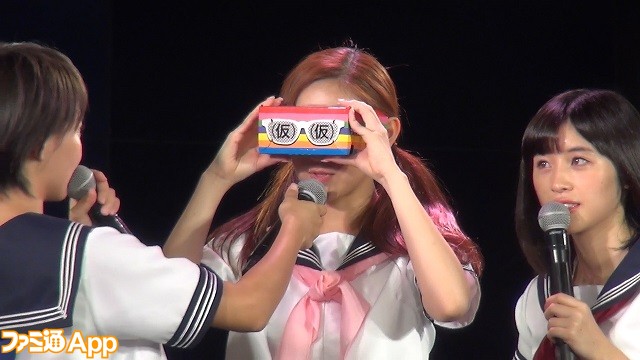
The "Up Up Girls (Kari) Seifuku Seishun Collection Apuri" (Or "Up Up Girls (Kari) Youth Uniform Spring Collection") project was actually announced a few months ago alongside the (Freakin' awesome) Apuga VR Goggles, (and the member auditions, funny enough). What is it? Possibly the dream of horny fans everywhere:

"Up Up Girls (Kari) Smartphone application that sees a mini-drama of each of the seven members at very close range"

"Watching with "Apuga VR Goggles (Kari)", or similar VR goggles for smartphones, you can watch the real performances of the members with impossible proximity, in addition to seeing them watch you, calling out, speaking to you and confessing! Please enjoy being so close to the members you can even hear them sigh. Furthermore, if there is a download code attached to an "Apuga VR Goggle (Kari)" you can also download a special movie. The "Special video" brings you even closer, with seven 3D kiss videos! That's right!"

Yup, still using that Google translate. Technology really is amazing when your only knowledge of the Japanese language is through memes and repetitive song lyrics.

A smartphone app where you can date members? And even receive a (digital) kiss if you shell out on some special edition VR goggles? This feels very AKB48-like to me. Sometimes I wonder if Up Front sees the weirder stuff 48g pull out, think "That's a cool idea" but aren't brave enough to inflict it upon their Hello! Project girls so they make their idols outside of H!P be their guinea pigs:

OH, YOU~

By the way, there's already previews of each member's route (minus the newbies) on Youtube, go nuts:

^That thumbnail tho

No news on if Up Up Girls 2 will be added in the future, but for now this is certainly… a thing.

The app is already on the (Japanese) Android store, with an iOS version soon to follow. The bad news is that the Apuga VR goggles were apparently only sold at their Budokan show, so we've just got to hope/wait for some jammy git to upload the kiss videos online before we can all experience them.

Too bad, those goggles looked rad:

Look Maniac, I'm a poet!


Source: New Up Up Girls. Also, Technology Is Amazing!

See first, here anticipated Nokia smartphones

The Nokia Mobile will release a live transmission via Facebook, the anticipated Nokia smartphones with Android operating system, this Sunday February 26 at 17:30 GMT during a scheduled press conference in Barcelona.

The Techblog team will be there to catch the first in my hands the new Nokia and transfer your impressions. All you can see live the event through the Fan Page of Nokia Mobile here .

Nokia-Mobile-MWC-2017-facebook-live

Nokia Mobile logo


Source: See first, here anticipated Nokia smartphones

Friday, 24 February 2017

BlackBerry could unveil a new tablet at MWC 2017

BlackBerry recently released a teaser confirming its plans of making the 'Mercury' smartphone official at its Mobile World Congress 2017 press conference in Barcelona this month. However, it looks like the company might announce a new tablet as well at the event, nearly six years after it debuted the PlayBook tablet.

On the Mobile World Congress website, BlackBerry Mobile is tagged with consumer electronics (CEU), devices, and tablet devices. Since BlackBerry hasn't released any new tablet since 2011, it could possibly mean that the company might announce a new tablet at this year's Mobile World Congress. If that is indeed the case, we would expect the tablet to be an ODM device, manufactured by TCL. In case you haven't heard already, TCL has been making devices for BlackBerry as part of a licensing agreement. The DTEK50 and DTEK60 smartphones launched last year are in fact based on TCL/Alcatel smartphones.

The 'Mercury' however, is not an ODM device. It is actually the last device that has been developed in-house by BlackBerry. Even though it was shown off at the CES show floor in January, the company has so far kept its spec sheet a secret, so we will need to wait just a little more to find out everything about the smartphone, which has so far only been known by its codename – Mercury.

Via: PhoneArena


Source: BlackBerry could unveil a new tablet at MWC 2017

LG X Power 2 release date, news & update: Smartphone maker stuns tech enthusiasts with a mega-battery & noteworthy specs

LG has surprised everybody by announcing the LG X Power 2 smartphone ahead of the MWC 2017 event. When everybody was expecting further details about its highly-anticipated flagship, the LG G6, the phonemaker has dropped a bomb just two days prior to the event, scheduled to be held in Barcelona, Spain. The smartphone is the successor to its 2016 entry, the LG X power. President of LG Electronics, Juno Cho, stated that the smartphone is all about great value and great technology.

According to Tech Times, the LG X Power 2 smartphone's advantage lies in its mega battery. At 4,500 mAh, users can enjoy watching videos continuously for 15 hours. LG has also claimed that users can enjoy surfing the Internet for an incredible 18 hours and the battery can support navigational direction for nearly 14 hours. LG has primarily targeted gamers and tech enthusiasts with this smartphone. Moreover, the mega battery reportedly takes just 120 minutes to charge fully. This is almost two times faster than most phones in the market.

"The LG X power2 has the most powerful battery capacity in LG's entire smartphone line-up so users can enjoy many hours of multimedia entertainment on its roomy display without worrying about recharging. The entire X series is all about great technology and great value, both important features for today's discerning smartphone customer," Cho stated in an LG statement.

The LG X Power 2 sports a 5.5-inch HD In-cell Touch and a 1.5 GHz Octa-Core chipset. In terms of memory, it has 2GB or 1.5GB RAM / 16GB ROM / Micro SD (up to 2TB). The smartphone runs on Android 7.0 Nougat operating system and has a 13MP primary camera and 5MP front camera with wide angle and LED flash. The LG smartphone supports LTE, 2G and 3G and has Wi-Fi, Bluetooth and USB 2.0. The smartphone is also equipped with Comfort View Mode, allowing users to read e-books by adjusting the amount of "blue light" radiated by the display.

The LG X Power 2 also features an improved outdoor display capability for easy readability even under strong sunlight. The smartphone will be released in Latin America in March and later in U.S., Europe, Asia and other countries. The colour variants that the smartphone will come with include Black Titan, Shiny Blue, Shiny Gold and Shiny Titan. Stay tuned on IBT AU for more updates on the LG X Power 2 smartphone and also LG G6. Also watch the LG X Power 2: Official Product Video below.


Source: LG X Power 2 release date, news & update: Smartphone maker stuns tech enthusiasts with a mega-battery & noteworthy specs

Thursday, 23 February 2017

Razer's Power Bank boosts your laptop battery while charging two smartphones

Gaming laptops have woefully short battery lives. It's par for the course when you're packing that much power into a portable notebook—but it's also a flaw that popular gaming hardware company Razer is taking aim at with the sleek-looking Razer Power Bank external battery.

The Power Bank is a 12,800mAh battery housed inside a black CNC aluminum case with the Razer logo on top. Razer says the Power Bank can help a Blade Stealth ultrabook stay alive for as long as 15 hours when paired with the device's built-in battery. No Blade Stealth? No problem. The Razer Power Banks works with any laptop that relies on USB-C for power, including the Dell XPS 13, the Asus Zenbook, and—gasp!—even Apple's MacBook.

If you haven't joined the USB-C revolution yet—and I'm guessing that's most people reading this article—then the Power Bank won't help bolster your notebook as it lacks any DC outlets. But it does charge more than just laptops. 

razerbank5 Razer

Razer Power Bank

The Power Bank also comes with two standard USB ports that can charge smartphones and other devices at the same time as a laptop via USB-C, for a total of three devices at once. Razer's Power Bank also supports Qualcomm Quick Charge 3.0 and Apple fast charge. For power inputs, the Power Bank has USB-C and microUSB ports.

Razer plans to roll out the Power Bank in March for $150. It will come with the external battery, as well as a USB Type-C cable and a USB-A to USB-C cable. It will not come with a wall charger for the Power Bank itself, however. Razer recommends its own 45W USB-C wall adapter, which sells for $50. Using its wall adapter, the company says the Razer Blade takes two hours to come to a full charge.

The impact on you at home: Razer's price is expensive, but it's not a crazy amount of money to spend on an external USB-C laptop charger like this. MaxOak products, for example, sell for a little bit less at around $135 on Amazon and also charge mobile devices at the same time as a laptop. Single purpose laptop chargers can be even cheaper. But with those products you don't get the Razer style, or the exclusivity of charging only USB-C laptops. I'll leave it to you to decide whether that's a good thing or not.

To comment on this article and other PCWorld content, visit our Facebook page or our Twitter feed.

Ian is an independent writer based in Israel who has never met a tech subject he didn't like. He primarily covers Windows, PC and gaming hardware, video and music streaming services, social networks, and browsers. When he's not covering the news he's working on how-to tips for PC users, or tuning his eGPU setup.


Source: Razer's Power Bank boosts your laptop battery while charging two smartphones

LG G6 And Samsung Galaxy S8 Release Date Tipped In New Report

By Paul Morris | February 23rd, 2017

We are well and truly getting to that time of the year where consumers start eagerly anticipating the announcement and release of multiple new flagship devices from various manufacturers.

With Mobile World Congress in Barcelona just around the corner, we are starting to see information pertaining to various devices coming thick and fast, with the latest leak from South Korea suggesting that we can expect LG to release the G6 smartphone this coming March 10, and Samsung to follow closely behind with the release of the Galaxy S8 on April 21.

With the world's media and a ton of excited consumers descending on Barcelona in the next few days for the MWC 2017, it makes perfect sense for companies to garner attention and interest for their hardware during the event.

That approach is definitely in the works for LG, who will be using the annual congregation to introduce and show off the highly-anticipated Android-powered G6. After that initial showcasing the company is expected to open up pre-orders for the device which will last from March 2nd to March 9th ahead of the official launch and shipping date of March 10th.

It's unknown if the release schedule is tactical or not, but this is the first time that LG will have released one of its G-series flagships ahead of Samsung's corresponding device. LG hasn't exactly had the best luck on its hands with previous devices and launches, meaning that it really needs to hit the sweet spot with the LG G6 and resonate instantly with users. Given Samsung's pretty disastrous 2016 with the Galaxy Note 7, and the subsequent loss of consumer trust in that brand, it seems like a perfect time for LG to at least attempt to try and capitalize on that void.

The latest word is that Samsung won't be able to get its Galaxy S8 hardware out into the market until April 21st after having to put earlier plans back due to the requirement of having substantial stock levels for a worldwide launch. It's being suggested that consumers will be able to benefit from a period of pre-order for the Galaxy S8, starting from April 13th.

However, all of this is purely speculation at the moment with no sources going out of their way to either confirm or deny this. With that said, if LG gets into the market first, and consumers are actually impressed with the latest LG offering, then it would make perfect sense for Samsung to try and pop that party by opening up Galaxy S8 pre-orders as soon as possible.

(Source: ETNews [Google Translate])

You may also like to check out:

  • Leaked Samsung App Might Just Have Given Us A Peek At Galaxy S8
  • Samsung Galaxy S8+ Specs Sheet Leaked Ahead Of Official Unveil
  • Fix iPhone 7 And iPhone 7 Plus Camera Freezing Problem, Here's How
  • Hidden macOS Sierra Features For Mac That You Probably Don't Know About
  • WhatsApp / WhatsPad++ On iPad And iOS 10 Without Jailbreak, Here's How To Install It
  • You can follow us on Twitter, add us to your circle on Google+ or like our Facebook page to keep yourself updated on all the latest from Microsoft, Google, Apple and the Web.

    Related Stories


    Source: LG G6 And Samsung Galaxy S8 Release Date Tipped In New Report

    Wednesday, 22 February 2017

    Manners maketh the smartphone user

    16:20 GMT

    The smartphone has revolutionzed the way we communicate and access information, but what about the effect it's had on our wider society? New research from business technology company Pitney Bowes looks at the tricky topic of smartphone e-etiquette -- and no, that doesn't mean sticking out your little finger as you use your phone. The research carried out among more than 1, … (continue reading)


    Source: Manners maketh the smartphone user

    Xiaomi races to gain larger slice of global smartphone cake

    By Zhang Ye Source:Global Times Published: 2017/2/22 22:48:39

    An attendee inspects the camera on a Xiaomi Mi 5 smartphone during a launch event in New Delhi, India on March 31, 2016. Photo: CFP

    China's Xiaomi Inc is setting out to snap up a share of new emerging smartphone markets abroad, as it is struggling with a domestic sales drop.

    The Beijing-based company revealed its ambitions this week. On Wednesday, it further enticed smartphone lovers in the Middle East and North Africa with the release of its three latest smartphone models - Mi MIX, Redmi Note 4 and Redmi 4A - at an event in Dubai.

    The launch event came soon after Xiaomi announced its official entry into Pakistan on Monday through a partnership with Smart Link Technologies for distribution and after-sales services.

    Pakistan, the world's sixth most-populated country, has become one of the fastest-growing smartphone markets since the introduction of third- and fourth-generation network standards in 2014.

    Under the partnership, shopping site daraz.pk will help sell Xiaomi products online in Pakistan, according to a joint press release obtained by the Global Times Wednesday.

    Daraz.pk also ru ns e-commerce operations in Bangladesh, Myanmar and Sri Lanka, which experts said can help Xiaomi's future expansion in those countries.

    Xiaomi, known for low-budget smartphones, rolled out its globalization strategy in 2014. India was among the first patch of overseas markets it entered. After two years of operations, Xiaomi racked up more than $1 billion in the country last year with smartphone shipments growing by almost 150 percent year-on-year,

    "It [Xiaomi] had been focusing on India since failing to meet sales targets in 2015 and suffering a sales contraction in the domestic market that it once led," Wang Yanhui, head of the Shanghai-based Mobile China Alliance, told the Global Times Wednesday.

    Data from International Data Corp (IDC) showed that Xiaomi dropped to No.5 with 41.5 million smartphones shipped in China last year, down 36 percent year-on-year. China's lesser-known Oppo led the market for the first time, closely followed by Huawei, Vivo and US phone maker Apple Inc.

    Xiaomi's low-budget phones can gain a niche in Pakistan where users are not wealthy and are sensitive to price, but the company won't be able to extend its success in India into Pakistan in the short run due to the underdeveloped telecoms network, said Li Yi, a senior research fellow at the Internet Research Center under the Shanghai Academy of Social Sciences.

    Xiaomi is not the only one eyeing overseas markets. Shenzhen-based Oppo has operations in 28 countries and regions outside China, including Southeast Asia, South Asia, Australia and Africa, a public relations representative with Oppo told the Global Times Wednesday.

    Among the top three Chinese vendors in the domestic market, IDC said that Huawei is "the most successful" one in terms of international expansion.

    It said in a report on February 5 that half of Huawei's phone shipments came from markets beyond China in last quarter of 2016. 

    "Chinese handset brands need to seek new growth engines in new emerging markets like Southeast Asia, India and Brazil to offset the headwinds they are facing in China, the world's largest smartphone market, which is getting increasingly concentrated and saturated," Li told the Global Times Wednesday.

    Both Li and Wang said that India will remain a key target for Chinese phone vendors this year.

    India's current development level is like that of China 10 years ago, suggesting a massive potential that Chinese companies won't want to miss, said Li.

    According to Counterpoint Research, Chinese brands like Xiaomi and Oppo accounted for more than half of the smartphone shipments in India in November.

    Oppo's PR representative said that Oppo mainly focuses on fulfilling the needs of young consumers from Southeast Asia and India. The company plans to invest 1.5 billion yuan ($218 million) on an industrial park in India over the next two to three years, she said, noting that the initial output of the park will b e 50 million units.

    "It is not easy to go global, especially doing businesses in the new emerging markets, where companies will face simmering protectionist sentiment and unclear taxation rules," Li cautioned.


    Source: Xiaomi races to gain larger slice of global smartphone cake

    Tuesday, 21 February 2017

    LTE speeds outpace home internet with new Qualcomm and Intel modems

    With every new generation of smartphone, LTE connections get faster. That's because the devices have faster modems that can transfer data at unprecedented download speeds.

    The top modem providers are Intel and Qualcomm, whose cellular chips are used in the iPhone. On Tuesday they both announced modems that will push LTE connections to speeds well over those of regular home internet connections.

    Qualcomm unveiled the X20 LTE chipset, which can transfer data at speeds of up to 1.2Gbps. Intel announced the XMM 7560 LTE modem, which can download data at speeds of up to 1Gbps.

    However, cellular networks aren't yet designed to handle such fast speeds. One exception is Telstra, an Australian telecommunications company, which has launched a gigabit LTE service for commercial use in that country.

    Gigabit LTE will slowly start appearing in mobile devices and networks this year, said Jim McGregor, principal analyst at Tirias Research.

    "This is making 4G what it was intended to be -- a true wireless broadband solution," McGregor said.

    These performance bumps are important as users handle more data,  McGregor said.

    "We've seen this with microprocessors for years," McGregor said.

    Qualcomm said its Snapdragon X20 modem will become available next year, and McGregor estimated it will be in devices soon after. Intel said its XMM 7560 is ready, but couldn't say when handsets would come out.

    Most users may not need LTE speeds of 1.2Gbps, especially when using apps like Uber, Snapchat and WhatsApp. But more PCs are getting LTE connectivity, and could use the speed for high-end applications.

    Qualcomm, a modem pioneer, is trying to stay a step ahead of Intel in the rat race to rev up LTE modems. Intel is speeding up modem development as wireless connectivity becomes an essential part of computing, said Aicha Evans, senior vice president and general manager of the Communication and Devices Group at Intel.

    The new modems are also a stepping stone to 5G, the next-generation cellular network technology that Evans estimated could deliver speeds of more than 45Gbps. Beyond mobile devices, 5G will be used for machine-to-machine communications and will be a standard feature in a wide range of devices including PCs, robots, drones and internet of things devices.

    The Snapdragon X20 LTE chipset is a CAT 18 modem and supports a wide range of cellular technologies that could make it work in most countries worldwide. The chip supports carrier aggregation and data transfers over multiple streams. It works with 40 cellular frequency bands and supports technologies like Voice over LTE (VoLTE) and LTE broadcast.

    Intel's XMM 7560 is a CAT 16 modem and supports carrier aggregation across multiple spectrums. The chip maker has already readied its first 5G modem, and the company now says it has silicon ready for that chip.


    Source: LTE speeds outpace home internet with new Qualcomm and Intel modems

    TrendForce: Apple to make over 100 million tenth anniversary iPhones this year; to feature AMOLED display; 3D facial recognition

    The next major iPhone release will certainly be one of the most anticipated events in the global consumer electronics market in the second half of 2017. TrendForce's recent findings on the 10th anniversary iPhone release reveal that Apple's latest refresh of the device series will include three new models, with one of them having significant hardware and design upgrades such as an AMOLED display.

    TrendForce estimates that the production volume of the next iPhone devices for this year will reach at least 100 million units, of which the model with the AMOLED display will make up the greatest share. The production volume of all iPhone devices for 2017 is projected to total around 230 million units, representing an annual increase of almost 6%.

    Next high-end iPhone will be the first in the series to feature AMOLED display in addition to other major design changes

    Based on the information from the supply chain, one of the three new iPhone devices that will be released in this year's second half will be a top-of-line model with standout features. This high-end iPhone will be the first in the device series to have an AMOLED display that is 5.8 inches in size and 2K in resolution. However, Apple will not implement the curved display design for the high-end iPhone because there are issues with the 3D glass in terms of production yield and drop test results. Thus, the next high-end iPhone is expected to have the same 2.5D glass for display cover as the current models.

    Another standout feature for the next high-end iPhone will be the removal of the physical home button as the related functions will be integrated into the display. The disappearance of the home button will make the device more compact without sacrificing the display area. Therefore, the display aspect ratio of the next high-end iPhone could exceed 2:1, while the phone's overall body size could be similar to that of the next 4.7-inch model.

    With regard to memory and storage specifications, the next high-end iPhone will carry 3GB of mobile DRAM and comes with two storage options: the 64GB and the 256GB.

    TrendForce: Apple to make over 100 million tenth anniversary iPhones this year; to feature AMOLED display; 3D facial recognition

    3D Sensing to expand iPhone's applications in biometric recognition and AR

    TrendForce also expects the next high-end iPhone to incorporate the 3D Sensing technology that can be used to provide facial recognition and features related to augmented reality (AR).

    The other two upcoming iPhone models are sized 5.5 and 4.7 inches, respectively. In contrast with the high-end counterpart, both will retain LCD for their displays. In terms of memory specifications, the 5.5-inch model will have 3GB while the 4.7-inch model will have 2GB. As for storage options, both the 5.5- and the 4.7-inch models are expected to include the maximum option of 256GB.

    From the pricing angle, Apple will likely make significant differentiation between the 4.7-inch model and the other two models. Due to the increasing level of competition in the global smartphone market, Apple is expanding its iPhone lineup in order to cater to different groups of consumers.

    The high-end AMOLED model will be the main iPhone sales driver for this year

    The AMOLED model will be leading the charge in this year's iPhone sales. Furthermore, it will account for at least 40% of the total production volume of all the next-generation iPhone devices for 2017, according to TrendForce's projection.

    Furthermore, the significant innovations in the latest iPhone refresh are designed to attract the large group consumers who have bought iPhones but yet to replace them since iPhone 6. Therefore, the 10th anniversary release is expected to trigger a huge wave of replacement demand. At the same time, Apple will likely set a very high price point for the AMOLED model in order to offset the costs of the display and other components. There is the possibility that the price of the AMOLED model could go up to US$1,000 or even higher. By contrast, the next 4.7-inch iPhone will be more economically priced as it will be competing against Chinese brands in regional markets where they have been successful, including their home turf.

    TrendForce adds that most of the global production capacity for AMOLED smartphone panels will be used to fulfill orders from Samsung and Apple this year. Other smartphone brands such as Huawei and OPPO are going to have difficulty in securing enough AMOLED panels to expand production and shipments of their high-end devices. The lack of AMOLED panel supply in turn could be a factor in preventing some Chinese brands from achieving the same kind of exceptional shipment growth as in last year.

    On the whole, TrendForce believes that Apple will boost iPhone sales this year with the combination of the three new models. However, whether this strategy will bring Apple a large revenue growth from iPhone sales remains to be seen.

    Source: TrendForce

    MacDailyNews Take: Just tell us when and where to order!


    Source: TrendForce: Apple to make over 100 million tenth anniversary iPhones this year; to feature AMOLED display; 3D facial recognition

    Monday, 20 February 2017

    Swipe Launches JIO Ready ELITE 3 Smartphone With 4G VoLTE Support, Indus OS At Rs. 5,499 on Flipkart

    Swipe Technologies has added one more affordable smartphone in its Elite series of smartphones – the ELITE 3. This phone is JIO Ready smartphone & is eligible for the Jio Happy New Year Offer. Priced at Rs. 5,499, this will be sold exclusviely by Flipkart from today. This phone is available in Space Grey, Silver and Champagne Gold colors.

    The Elite 3 runs on the Indus OS based on Marshmallow 6.0 which comes with a database of 200,000+ words in 12 regional languages. The Indus Reader is an OS-integrated text-to-speech facility and it also provides Word and Matra prediction for faster and smarter typing. The Indus OS also allows the users to use hybrid keyboard wherein they can type in regional language using English keyboard.

    The 4G VoLTE supported Elite 3 features a 5 inch HD IPS display and is powered by a 1.3 GHz Quad-Core processor combined with 2GB RAM. This Dual-SIM phone has an internal memory of 16GB, which is expandable up to 32 GB.

    This phone is equipped with an 8MP Rear Camera and 5MP Front Camera for clicking selfies. ensures great selfies. It is packed with 2500mAh battery.

    Announcing the launch, Founder and CEO of Swipe Technologies, Mr. Shripal Gandhi said: "India might be the world's fastest growing smartphone market but one of the biggest problems that many users face is that the user interface of most smartphones is English. Google says that Hindi content consumption, for instance, has increased five times when compared to English content in India, and even local language search queries have increased 10 times over the last 18 months alone. Taking cue from these trends, Swipe has developed a powerful smartphone that is sleek, superfast, functional, caters to regional needs and affordable too."


    Source: Swipe Launches JIO Ready ELITE 3 Smartphone With 4G VoLTE Support, Indus OS At Rs. 5,499 on Flipkart

    Rugged Handheld Device 2017 Global Market Size,Status and Forecast to 2022

    Rugged Handheld Device Market

    WiseGuyReports.Com Publish a New Market Research Report On – "Rugged Handheld Device 2017 Global Market Size,Status and Forecast to 2022".


    "The report provides a basic overview including definitions, classifications, applications and industry chain structure and development policies and plans are discussed as well as manufacturing processes and cost structures."


    Ruggedized handheld devices (smartphones and readers/scanners) are smaller (5-7 inches screen size) than a tablet and a laptop. These devices withstand difficult climatic and environmental conditions. Rugged handheld devices have a battery life of more than 10 hours. They are lightweight and offer faster navigation through a touchscreen than a keyboard or a mouse. The rugged handheld devices are used for reports writing, communicate with peers, conduct surveillance, and analyse databases.

    Get Sample Report@https://www.wiseguyreports.com/sample-request/965243-global-rugged-handheld-device-market-by-manufacturers

    For more information or any query mail at sales@wiseguyreports.com


    Scope of the Report:  This report focuses on the Rugged Handheld Device in Global market, especially in North America, Europe and Asia-Pacific, South America, Middle East and Africa. This report categorizes the market based on manufacturers, regions, type and application.

    Market Segment by Manufacturers, this report covers Honeywell Zebra Technologies Datalogic Panasonic Handheld Group CIPHERLAB TouchStar Technologies Juniper Systems Aceeca Advantech

    Market Segment by Regions, regional analysis covers North America (USA, Canada and Mexico) Europe (Germany, France, UK, Russia and Italy) Asia-Pacific (China, Japan, Korea, India and Southeast Asia) South America (Brazil, Argentina, Columbia etc.) Middle East and Africa (Saudi Arabia, UAE, Egypt, Nigeria and South Africa)

    Market Segment by Type, covers Mobile Computer Reader / Scanner Smartphone Other (eg. PDA)

    Market Segment by Applications, can be divided into Industrial / Manufacturing Logistics/Transport Government Retail Other


    Complete Report Details @ https://www.wiseguyreports.com/reports/965243-global-rugged-handheld-device-market-by-manufacturers

    There are 15 Chapters to deeply display the global Rugged Handheld Device market.

    Chapter 1, to describe Rugged Handheld Device Introduction, product scope, market overview, market opportunities, market risk, market driving force;

    Chapter 2, to analyze the top manufacturers of Rugged Handheld Device, with sales, revenue, and price of Rugged Handheld Device, in 2016 and 2017;

    Chapter 3, to display the competitive situation among the top manufacturers, with sales, revenue and market share in 2016 and 2017;

    Chapter 4, to show the global market by regions, with sales, revenue and market share of Rugged Handheld Device, for each region, from 2012 to 2017;

    Continued…….


    Table Of Contents – Major Key Points

    2 Manufacturers Profiles  2.1 Honeywell 2.1.1 Business Overview 2.1.2 Rugged Handheld Device Type and Applications 2.1.2.1 Type 1 2.1.2.2 Type 2 2.1.3 Honeywell Rugged Handheld Device Sales, Price, Revenue, Gross Margin and Market Share (2016-2017) 2.2 Zebra Technologies 2.2.1 Business Overview 2.2.2 Rugged Handheld Device Type and Applications 2.2.2.1 Type 1 2.2.2.2 Type 2 2.2.3 Zebra Technologies Rugged Handheld Device Sales, Price, Revenue, Gross Margin and Market Share (2016-2017) 2.3 Datalogic 2.3.1 Business Overview 2.3.2 Rugged Handheld Device Type and Applications 2.3.2.1 Type 1 2.3.2.2 Type 2 2.3.3 Datalogic Rugged Handheld Device Sales, Price, Revenue, Gross Margin and Market Share (2016-2017) 2.4 Panasonic 2.4.1 Business Overview 2.4.2 Rugged Handheld Device Type and Applications 2.4.2.1 Type 1 2.4.2.2 Type 2 2.4.3 Panasonic Rugged Handheld Device Sales, Price, Revenue, Gross Margin and Market Share (2016-2017) 2.5 Handheld Group 2.5.1 Business Overview 2.5.2 Rugged Handheld Device Type and Applications 2.5.2.1 Type 1 2.5.2.2 Type 2 2.5.3 Handheld Group Rugged Handheld Device Sales, Price, Revenue, Gross Margin and Market Share (2016-2017) 2.6 CIPHERLAB 2.6.1 Business Overview 2.6.2 Rugged Handheld Device Type and Applications 2.6.2.1 Type 1 2.6.2.2 Type 2 2.6.3 CIPHERLAB Rugged Handheld Device Sales, Price, Revenue, Gross Margin and Market Share (2016-2017) 2.7 TouchStar Technologies 2.7.1 Business Overview 2.7.2 Rugged Handheld Device Type and Applications 2.7.2.1 Type 1 2.7.2.2 Type 2 2.7.3 TouchStar Technologies Rugged Handheld Device Sales, Price, Revenue, Gross Margin and Market Share (2016-2017) 2.8 Juniper Systems 2.8.1 Business Overview 2.8.2 Rugged Handheld Device Type and Applications 2.8.2.1 Type 1 2.8.2.2 Type 2 2.8.3 Juniper Systems Rugged Handheld Device Sales, Price, Revenue, Gross Margin and Market Share (2016-2017) 2.9 Aceeca 2.9.1 Business Overview 2.9.2 Rugged Handheld Device T ype and Applications 2.9.2.1 Type 1 2.9.2.2 Type 2 2.9.3 Aceeca Rugged Handheld Device Sales, Price, Revenue, Gross Margin and Market Share (2016-2017) 2.10 Advantech 2.10.1 Business Overview 2.10.2 Rugged Handheld Device Type and Applications 2.10.2.1 Type 1 2.10.2.2 Type 2 2.10.3 Advantech Rugged Handheld Device Sales, Price, Revenue, Gross Margin and Market Share (2016-2017)

    3 Global Rugged Handheld Device Market Competition, by Manufacturer  3.1 Global Rugged Handheld Device Sales and Market Share by Manufacturer 3.2 Global Rugged Handheld Device Revenue and Market Share by Manufacturer 3.3 Market Concentration Rate 3.3.1 Top 3 Rugged Handheld Device Manufacturer Market Share 3.3.2 Top 6 Rugged Handheld Device Manufacturer Market Share 3.4 Market Competition Trend 

    ………..CONTINUED


    For more information or any query mail at sales@wiseguyreports.com

    Buy This Report@ https://www.wiseguyreports.com/checkout?currency=one_user-USD&report_id=965243


    ABOUT US:

    Wise Guy Reports is part of the Wise Guy Consultants Pvt. Ltd. and offers premium progressive statistical surveying, market research reports, analysis & forecast data for industries and governments around the globe. Wise Guy Reports features an exhaustive list of market research reports from hundreds of publishers worldwide. We boast a database spanning virtually every market category and an even more comprehensive collection of rmaket research reports under these categories and sub-categories.

    Media ContactCompany Name: Wiseguyreports.comContact Person: Norah TrentEmail: Send EmailPhone: +1 646 845 9349, +44 208 133 9349City: New York CityState: NYCountry: United StatesWebsite: www.wiseguyreports.com


    Source: Rugged Handheld Device 2017 Global Market Size,Status and Forecast to 2022

    Sunday, 19 February 2017

    New App can Help Speak Language of Eyes

    Scientists have developed an app that could help people speak the language of eyes -- literally.

    The smartphone app that researchers working with Microsoft have developed can interpret eye gestures in real time, decode these gestures into predicted utterances, and facilitate communication.

    'Current eye-tracking input systems for people with ALS or other motor impairments are expensive, not robust under sunlight, and require frequent re-calibration and substantial, relatively immobile setups.'

    Advertisement

    Called GazeSpeak, the app would help people with amyotrophic lateral sclerosis (ALS), a condition resulting in individuals gradually losing their strength and the ability to speak, eat or move.

    As part of the Enable team at Microsoft Research, the scientists developed GazeSpeak to help people with ALS who can move their eyes but cannot speak.

    ALS also causes other motor impairments that affect voluntary muscle movement.

    According to the researchers, current eye-tracking input systems for people with ALS or other motor impairments are expensive, not robust under sunlight, and require frequent re-calibration and substantial, relatively immobile setups.

    Eye-gaze transfer (e-tran) boards, a low-tech alternative, are challenging to master and offer slow communication rates.

    "To mitigate the drawbacks of these two status quo approaches, we created GazeSpeak, an eye gesture communication system that runs on a smartphone, and is designed to be low-cost, robust, port able, and easy-to-learn, with a higher communication bandwidth than an e-tran board," the researchers wrote in the abstract of a paper scheduled to be presented in May at the Conference on Human Factors in Computing Systems in Colorado, US.

    "GazeSpeak can interpret eye gestures in real time, decode these gestures into predicted utterances, and facilitate communication, with different user interfaces for speakers and interpreters," the researchers said.

    GazeSpeak uses artificial intelligence to convert eye movements into speech, and runs on the listener's device so that he/she can understand what is being said in real time, New Scientist reported.

    The app will be available on the Apple App Store before the conference in May, according to the report.

    Source: IANS


    Source: New App can Help Speak Language of Eyes

    iOS 11 release date, update, features, beta, compatibility and everything you need to know

    iOS 11GETTY

    INBOUND: The iOS 11 update will drop on June 5 at WWDC 2017

    Forget the iPhone 8 and iPad Pro 2, that Apple-branded smartphone or tablet you currently own is the only device you need, especially with the iOS 11 release date on the horizon.

    Yes, new hardware might look cool and be a little quicker, a little shiner and host slightly better cameras, but it's the software within that brings the biggest changes.

    Unlike Android and its heavily fragmented ways that mean you never know when you'll be getting the update, Apple's ecosystem treats everyone equally. That means when the iOS 11 drops for the flashy iPhone 7 Plus owners, those with the more affordable iPhone SE will get the patch too.

    But what exactly will this sizeable iPhone and iPad upgrade bring? Well, we're glad you asked. Here's everything you need to know about the iOS 11 release date and what features you can expect your smartphone or super slate to add.

    IOS 11 RELEASE DATE: WHEN WILL THE NEW IPHONE SOFTWARE LAUNCH?

    APPLE

    The big question we all want to know is when the iOS 11 release date will be and when we'll be able to fill our phones with lovely new features.

    Well, despite it still being months away, Apple has already confirmed the date you're going to want to keep free in your diary.

    That magical date? June 5. That's the opening day of the company's 2017 Worldwide Developer Conference (WWDC) and will see Apple CEO Tim Cook take centre stage at the company's keynote event to unveil not just iOS 11, but updates to the firm's macOS, watchOS and tvOS platforms too.

    Apple IOS 10 – the top SEVEN features coming to your iPhone this week Thursday, 8th September 2016

    APPLE is about to launch its biggest ever update and here's some cool new feature landing on your iPhone this Tuesday

    1 / 8

    COMING SOON: Apple iOS 10

    That's the good news, now for the bad. Just because Apple will showcase its new smartphone OS on June 5 doesn't mean you'll be able to add the final release to your phone or tablet straight away.

    Sadly the wait will continue for months rather than weeks after that - assuming Apple, a notorious creature of habit, sticks to its traditional launch cycles that is.

    Historically, following a June unveiling, Apple's major iOS releases have then been put on hold until September, eventually rolling out to existing iDevice owners in the days leading up to that year's iPhone release - a platform that will this year see the long awaited iPhone 8 unveiled.

    While we'll know a lot more about iOS 11 in just a couple of months then, we're still more than half a year away from the software's full release, sob.

    IOS 11 FEATURES: EXPECT BIG CHANGES

    GETTY/APPLE

    Although Apple's famed for its cloak of secrecy, there's been been a bit of chatter about certain new iOS 11 features.

    No, a full iOS 11 features list hasn't yet been revealed, but that hasn't stopped the odd feature from making a premature appearance online.

    Most notable among these is a new floating keyboard that would make it easier to type on larger handsets such as the 5.5-inch iPhone 7 Plus, or the upcoming iPhone 8 that's expected to adopt a near 5.2-inch display.

    This has already been spotted in a develop build of the existing iOS platforms, despite not actually being available. Instead it was stumbled upon by a dev who went routing through the system's code.

    Given its there but not really there standing, it's believed this feature is being saved up for a future release, most likely iOS 11.

    This isn't the only new feature tipped to make an iOS 11-based appearance either. Siri is expected to be a big focus during Apple's WWDC gathering, with the voice-controlled digital assistant expected to graduate into full on AI standing.

    Looking to bring the fight to the likes of Amazon Echo and Google's own voice AI, Siri is expected to not just gain more control of your iPhone and connected devices, she's also been tipped to start getting a better grasp of human language, with a more natural, conversational, chat ability to be introduced.

    With dozens of further updates to be announced at a latter date, one of the other upcoming additions to leak surrounds improved Apple Pay skill.

    It's claimed that through iOS 11, users will be able to send cash directly through iMessage using Apple's secure payment platform.

    Although major feature updates are expected, don't expect the upcoming software refresh to introduce any major design updates. Instead, look at for aesthetic similarities to be partnered with a number of performance enhancing updates.

    IOS 11 BETA: HOW TO GET THE IPHONE UPDATE EARLY

    DAILY STAR ONLINE

    Just because the full iOS 11 update won't be available until September doesn't mean you can't make use of software at all.

    If you simply can't wait that long, Apple is expected to follow recent traditions and launch an iOS 11 beta programme shortly after the update makes its WWDC debut.

    This free to use preview will let users try certain iOS-bound features early and, although not all inbound additions will be available, further updates will be drip fed through until the platform's full release.

    To sign up, all you'll need to do is visit Apple's official Beta Software website and enter your details.

    Be warned though, as this is pre-release software, it can be quite buggy and cause potential problems for the devices it's installed on.

    IOS 11 COMPATIBILITY: WILL YOU PHONE GET THE UPDATE?

    GETTY/APPLE

    Apple has yet to confirmed the full list of compatible devices, but if you've bought an iPhone or iPad in the past couple of years, don't worry, you won't be missing out when it comes to iOS 11 update time.

    The likes of the iPhone 7 and iPhone 7 Plus are guaranteed to benefit from a full roster of iOS 11 skills, as are the equivalent iPhone 6S and iPhone 6 handsets, as well as both the 9.7-inch and 12.9-inch iPad Pro models.

    The further back you go the tricker things get, however.

    Although the current iOS 10 software plays nice with everything from the iPhone 5 and iPad mini 2 upwards, somethings got to give as system demands continue to increase.

    On the smartphone front we'd expect the 2012 released iPhone 5 and colourful iPhone 5C bumped from the compatibility list, while the iPad mini 2's days of annual updates might be about to be brought to a close too.

    This is currently unconfirmed, however. For the full list of iOS 11-friendly devices, you'll have to wait until the software's full launch on June 5.

    Related articles
    Source: iOS 11 release date, update, features, beta, compatibility and everything you need to know

    Saturday, 18 February 2017

    New GSMA mobile engagement study finds almost half of mobile users still only talk and text

    It's not everyday you see an endeavor of this scale and potential importance to the mobile realm. GSMA has take upon itself to create and start conducting a new annual study and calculate what it is calling the new Global Mobile Engagement Index (GMEI). It is an unique figure that measures the population's level of engagement with mobile phones, taking into account both types of use cases and frequency. The gathered data covers smarthpones and more traditional handsets and spans across 56 countries (32 developing, 24 developed), at 1,000 online survey respondent (18+) per country, effectively representing around 80% of the global population.

    GMEI characteristics GMEI characteristicsGMEI characteristics

    It is a truly monumental effort, employing a carefully selected set of 29 mobile use cases and rating each participant on both number of services used and frequency. The end goal is to give a clear and comparable index per country, but also create a comprehensive categorization system among the users themselves. GSMA has used said 29 use cases to coin four categories: "Aficionados", "Pragmatists", "Networkers" and "Talkers". We will include select parts of the report for you to read on the definitions, but we also highly suggest hitting up the source link and browsing through the various infographics it has to offer.

    On to the punchline then: "Almost Half of Mobile Users Still Only Talking and Texting". According to GSMA, that is a fact and when you think about it, it's not really that surprising. Not only are traditional cellphones and feature phones still well in circulation, there are a lot of regional, age and tech literacy factors to account for as well. This leaves us with 47% "Talkers" in 2016, although GSMA believes current trends will relatively quickly shrink that number down to 29% in 2030.

    Ranking by region Ranking by regionRanking by region

    There are some other interesting insights the data at hand has to offer. For instance, it turns out good old SMS is still more frequently used than online messaging services in several mature markets, like France and the US. A lot of this has to do with the wide availability of "unlimited text" carrier offers - just one of the interesting facts GMEI accounts for. It might also interest you to learn that not only is the tech-savvy crowd pushing its upper age cap year on year, but in certain places, older generations turn out the be quicker adopters. In South Korea, around 80% of "Baby Boomers" (age 51 to 69) use their devices to make purchases online.

    Trends and insights Trends and insightsTrends and insights

    While on the topic, it turns out a whopping 70% of smartphone users globally use their connected mobiles to get information about products and services, prior to purchasing them. However, only two out of three will make the order, or book the service on the device itself. This is definitely the kind of information online businesses would crave. Other unearthed trends could even help guide potential efforts to aid local conditions. For instance, Myanmar ranks high in terms of smartphone ownership, but over 60% of users claim they are prevented from taking full advantage of the technology, due to lack of regionalized content.

    Last, but not least, as an added bonus, GSMA has also provided an online survey, to find out where you land on their new user scale.

    Source 1 (PDF) | Source 2 | Via


    Source: New GSMA mobile engagement study finds almost half of mobile users still only talk and text