Thursday, 30 November 2017

How Amazon Is Eroding Your Smartphone Dependence

Latest-Consumer-Technology-Products-On-Display-At-CES-2017Amazon's plan for the Echo is becoming clearer.

David Becker/Getty Images

Amazon's Echo smart speakers and Alexa virtual assistant are infringing on your smartphone's territory—and it's no accident. Amazon is expanding the capabilities of its Alexa-enabled products in a bid to slowly win a bigger place in our smartphone-centric world.

This week, at its Re:Invent conference in Las Vegas, Amazon announced a few important additions. Starting Wednesday, third-party Alexa apps can alert users with notifications. And next year, apps also will gain the ability to identify multiple users in a household by voice in order to customize experiences for each individual.

The former ability—notifications—is a big one for the Echo ecosystem. Until now, using an Amazon Echo product has been a passive experience. The device sits quietly until you wake it with a command. For the first time, Echo products can draw your attention when there's breaking news, a notification from a family member, or a weather alert (The Washington Post, family location app Life360, and AccuWeather are among the first to test out this feature).

It works like this: When you get a notification, your Echo product will emit a chime and then a yellow light will ring the top of your Echo, Echo Dot, or Echo Show. You can then ask, "Alexa, what did I miss?" or "Alexa, what are my notifications?" and she will speak them back to you. In this way, you can stay up to date on what's happening in your world without isolating yourself in front of a smartphone screen.

As for voice identification, Amazon first announced this feature back in October, and third-party apps can begin employing it early next year. This will allow apps to figure out who is speaking when they summon Alexa and then pull up the content that's relevant to them. This is particularly useful when it comes to playing music or pulling up to-do lists or calendar events, which could vary from household member to household member.

These updates may sound small, but they're not insignificant. They're part of a slow, deliberate push to make Amazon Alexa technology the logical evolution out of our dependence on smartphones. Like how the smartphone made accessing information on desktop computers more convenient, voice-enabled home assistants like Alexa could do the same for the information we currently rely on our smartphones for.

"We're trying to get people away from all the personal electronics and create more of a family, communal experience," Miriam Daniel, Amazon's head of product management for Alexa, said in an interview with Fast Company. "So you're not just looking down into your individual phones, and you're actually collaborating with your family members."

This push began when Amazon enabled third-party skills (questions apps can answer or tasks they can accomplish) in late 2015. The platform now boasts more than 10,000 skills. While it's no App Store, it has integrations with many popular apps, services, and games, including Uber, Jeopardy!, and Starbucks. Then, largely this year, Amazon made a big expansion to its Echo product line: It added options with different sizes and two models that include screens. It also is allowing other hardware manufacturers to integrate Alexa into their products. In the latter case, for example, you can even get Alexa in your car with the Garmin Speak.

Even without an Alexa product, Android and iOS phone owners can also talk to Alexa within the Amazon shopping app, where you can make shopping-related requests (naturally) but also control smart home products or ask about the weather. Amazon is also reportedly working to integrate its virtual assistant into upcoming Android handsets as well. (Amazon did attempt to build its own smartphone in the past, but it never did as well as its other hardware products, such as its Kindle e-readers and Echo hardware.)

It's worth talking more specifically about the two Echo models with screens—the Spot and the Show. These products start to blur the line between using a smartphone and using a smart speaker. On these models, you can stream a feed from your home security camera, look at photos or videos, and read short news summaries instead of having them spoken by Alexa. And the Amazon Echo Look, while screen-less, still includes a camera.

Communication seems like one of the last major smartphone functions the Echo hasn't begun to tackle, but even there, you can use Echo speakers (or the Amazon app) to act as an intercom system. Still, it's unlikely the Echo will take on all the capabilities of a smartphone, such as photo editing and sharing. If you've got to stare at its small screen for more than a minute or two, that defeats the point of the "communal experience" Daniel mentioned. However, it can offload a lot of quick, tedious, or productivity-related phone functions.

Amazon certainly could have gone other directions with Alexa and its Echo products. Like Apple's upcoming HomePod, the company could have focused more on high-end audio and music performance with its Echo speakers. It could also have focused the devices more as members of the smart home space—hubs for controlling the other connected tech and appliances in your home. And like Apple did with Siri at the start, Amazon could have kept Alexa closed to third-party app integration and controlled the environment itself.

Instead, Amazon has built out the Alexa empire into a companion to your smartphone experience and, soon, a largely screen-less replacement for many of the functions we've come to rely upon them for. There's growing backlash against our smartphone obsession, which one MIT psychologist likened to the obesity epidemic. But Amazon's solution, with the updates rolling out today, satisfies our need for connectivity and instant access to information without the anti-social negatives of smartphone use. Amazon has been sneakily building up to this point, but now it's clear: Alexa is far more than just an assistant.


Source: How Amazon Is Eroding Your Smartphone Dependence

HTC X2 Smartphone Released

Today, HTC released a new smartphone called HTC X2. This device was released in collaboration with Japanese operator Softbank. Well, many will be surprised that nothing in form of rumor or speculation was heard about this device prior to its release. This is because it is not an entirely new smartphone, it is the Japanese version of HTC U11 Life. The released smartphone comes with the model number "X2-HT" and it appears that HTC has no plans to release any other high-end device this year.

Just like HTC U11 Life, HTC X2 is powered by a Snapdragon 630 processor coupled with 6GB of RAM and 64GB of internal storage. It is equipped with a  5.2-inch screen with 1080P resolution. One of the differences between this smartphone and the U11 Life is the Operating system. While this smartphone runs on Android One operating system, the U11 Life runs on Android 7.1. HTC X2 is IP67 waterproof and dustproof.  In the camera department, HTC U11 Life is equipped with a 16MP while the selfie snapper is an 8MP shooter. Sales of this device which is available in gem blue and ice white colour options will commence next month.

Related

I'm a professional geologist and an enthusiastic writer who is interested in technology. I sleep and wake with my mobile phone, data connection on 24/7. My PC is never more than a metre from me.


Source: HTC X2 Smartphone Released

Wednesday, 29 November 2017

Google’s Pixel C tablet gets a little love in Android 8.1 preview with new launcher features from Pixel phones

Android just keeps getting better and better on phones, but Android tablets are very much neglected. There haven't been any meaningful improvements to Android on tablets in years, but Google hasn't totally forgotten them. In the latest Android 8.1 preview, the Pixel C tablet has gotten just a bit of attention.

A quick recap in case you've understandably forgotten, the Pixel C was Google's last tablet release back in late 2015. It's still the only tablet in the Google Store, even seeing major price cuts in some regions, and it's also one of the few decent Android tablets available today, and the only one running Android Oreo.

Google has made a habit of quietly making changes to the Pixel C's software to better align it with the Pixel smartphones, from adding new navigation buttons to a fresh launcher in previous updates. However, in this latest update, we simply get some new launcher features.

As Android Police notes, the Pixel Launcher on the C in the latest 8.1 developer preview brings a few features from the Pixel phones over to the tablet. That includes the redesigned "app shortcuts" menu that debuted on the original Pixel on Oreo, and we also get the ability to use changing icon shapes and toggle notification dots. Further, the app drawer now utilizes the full size of the tablet's screen rather than being condensed to the center.

If you're still using a Pixel C, you can check out these changes by either signing up for the Android 8.1 beta program, or by sideloading the launcher update.

Check out 9to5Google on YouTube for more news:


Source: Google's Pixel C tablet gets a little love in Android 8.1 preview with new launcher features from Pixel phones

Scientists release a How-To for building a DIY microscope with smartphone and 3D printer

Nov 29, 2017 | By Benedict

Researchers from the University of Houston have released an open-source dataset for turning a smartphone into a 3D printed microscope. Such a microscope can be used to detect waterborne pathogens and carry out other helpful diagnostic functions.

When you get too stuck into Facebook or Candy Crush, it's easy to forget that a smartphone can do truly incredible things. You can turn it into a 3D printer, as the ONO smartphone 3D printer proves, and you can even use 3D printed accessories to transform a smartphone into something else entirely.

A new project at the University of Houston uses 3D printed components to turn a smartphone into a microscope capable of carrying out important medical functions. It's fully open source, and the transformed smartphones can be used in rural areas and developing countries where more traditional microscopic equipment isn't yet available.

By attaching an inkjet-printed elastomer lens to a standard smartphone, the Houston researchers have been able to develop a system capable of fluorescence microscopy, a process used in biology, medical diagnostics, and other fields to detect otherwise undetectable information about cells and tissue.

This means the partially 3D printed setup is able to detect waterborne pathogens—micro-organisms that can transfer disease—and perform other diagnostic functions. This could be helpful not only to medical professionals, but to those like backpackers who want to quickly test the contents of river water, for example.

The research into this project actually goes way back: associate professor Wei-Chuan Shih and his lab developed their first external microscopic smartphone lens back in 2015, and that research was then developed further using a $100,000 grant from the National Science Foundation's citizen science initiative.

Now, after Shih's lab created a company for the specific purpose of producing and distributing those smartphone lenses, the researchers have managed to improve the microscope with additional features, including a platform made of low-cost parts and LEGO bricks. The platform can be used for high-throughput quality inspection of the inkjet-printed lenses.

The lenses themselves use LED lighting and a 3D printed cartridge which holds a glass slide, with both the LED and cartridge attaching to a smartphone. Light is input from the side of the 1-mm-thick slide, and travels through the glass, refracting to present the microscopic image.

To see if the DIY microscope is really effective enough for its designated purpose, the researchers tried testing water samples for pathogens including Giardia lamblia and Cyrptosporidium parvum. Both the 3D printed setup and a regular tabletop optical microscope were tested, and results showed a resolution of two microns with the smartphone device—lower than the regular microscope, but still more than capable of detecting the pathogens.

Shih and the other researchers are now excited to see how the 3D printed smartphone device performs in real-world applications outside of the lab.

Their latest paper on the research, "Open-source do-it-yourself multi-color fluorescence smartphone microscopy," has been published in Biomedical Optics Express.

Posted in 3D Printing Application

Maybe you also like:


Source: Scientists release a How-To for building a DIY microscope with smartphone and 3D printer

Tuesday, 28 November 2017

Future smartphones could fully charge in minutes with Samsung's new battery technology

  • Samsung's Advanced Institute of Technology (SAIT) has developed a new battery technology with more capacity and extremely fast charging times. 
  • The new graphene-based technology could charge a battery in 12 minutes, where the same capacity battery could charge in an hour with standard fast charging. 
  • It could remove the risk of ever running out of battery simply because it could be more convenient to charge your devices. 
  • Samsung's Advanced Institute of Technology (SAIT) announced on Tuesday that it has developed a battery technology that can fast-charge mobile devices and electric vehicles faster than ever before. 

    For a battery that usually takes an hour to charge with current fast-charge technology, Samsung claims the new technology could fast-charge a battery in 12 minutes. 

    quick chargeCurrent fast charging is great, but Samsung's new battery could charge significantly faster. Antonio Villas-Boas/Business Insider

    The new technology includes a single layer of carbon atoms from graphite, known as graphene, which is "100 times more effective than copper in conducting electricity." It also transfers energy "140 times faster" than silicon used in current lithium technology, which makes it "an ideal material for fast charge," according to Samsung. 

    Samsung's new battery technology might even give mobile devices and electric vehicles more battery life compared to current batteries, as they have the potential for more capacity. It's unclear how much longer these batteries would last, but the extremely fast charging would make it more convenient to top off your device when you need a charge simply because it takes less time. So if you can spare the occasional five minutes here and there for a top up, you'll be less likely to run out of battery.

    The Tesla Roadster 2. Tesla/via REUTERSElectric vehicles, like those from Tesla, could charge a lot faster thanks to Samsung's new technology. Thomson Reuters

    The concept is exactly the same as today's fast-charging technology in smartphones, where 30 minutes of regular fast charging gets you 50% of battery charge. As its name suggests, fast charging is, indeed, faster than regular charging, which could take over two hours to fully charge a smartphone battery. 

    This all sounds great, and Samsung has found a way to mass produce the technology at an "affordable price." But there's no mention of when, or if, Samsung would ever use its new battery technology in mobile devices and other electric devices.

    SEE ALSO: This is the phone Android users should get if they like the iPhone X's design NOW WATCH: Samsung released the widest computer monitor you can buy — here's what it's like
    Source: Future smartphones could fully charge in minutes with Samsung's new battery technology

    DIY: Scientists Release a How-To for Building a Smartphone Microscope

    Shih DIY LensFig. 1. (a) Slide-launched TIR-guided illumination: elastically scattered photons are blocked by the filter, while fluorescent photons can reach the smartphone camera. (b) Photorealistic cut-out rendering (c) Assembly procedure: inkjet-printed lens attached onto smartphone camera, smartphone adapter (1) fitted on smartphone, adhesive ring (2) attached to remove stray light, color filter attached on adhesive ring for fluorescence imaging, base ring (3) attached to adapter, threaded barrel (4) with slot enabled z-axis focusing and sample insertion, lid (5) attached to block ambient light, LED module (6) provided illumination. (d) System attached to smartphone.

    Add one more thing to the list of tasks your smartphone can perform. University of Houston researchers have released an open-source dataset offering instructions to people interested in building their own smartphone microscope.

    The researchers describe the process in a paper published in Biomedical Optics Express, demonstrating that a basic smartphone equipped with an inexpensive inkjet-printed elastomer lens can be converted into a microscope capable of fluorescence microscopy, able to detect waterborne pathogens and perform other diagnostic functions.  

    Wei-Chuan Shih, associate professor of electrical and computer engineering, said fluorescence microscopy is "a workhorse," used in biology, medical diagnostics and other fields to reveal information about cells and tissue that can't otherwise be detected. The technique allows more information to be harvested from fluid, tissue and other samples, but not everyone has access to an optical microscope that can use fluorescence.

    It could extend sophisticated imaging techniques to rural areas and developing countries, Shih said. But it also could have more widespread applications, such as allowing backpackers an easy way to test for pathogens in rivers and streams.

    "We really hope anyone who wants to build it can," he said. "All the pieces can be made with a 3-D printer. It's not something that belongs just to the lab."

    The work was partially funded with a $100,000 grant from the National Science Foundation's citizen science initiative, which encourages scientists to find ways to expand knowledge of and access to research.

    Shih's lab created an inexpensive lens that can turn a smartphone into a microscope in 2015; he and members of the lab created a company to produce and distribute the inkjet-printed lenses, which attach directly to a smartphone camera lens.

    They continue efforts to improve on that process, and in an article published earlier this fall in Applied Optics they reported engineering a platform – constructed with low-cost parts including LEGO bricks and plastic imaging components – to ensure high-throughput quality inspection of the inkjet-printed lenses.

    The lenses were used in the work reported in Biomedical Optics Express, which details how the researchers combined simple LED lighting with a 3-D printed cartridge designed to hold a conventional glass slide. The light and cartridge attach to the smartphone.

    While conventional tabletop microscopes shine light through the sample from above, the Shih lab's technology launches the light from the side of the slide, which is about one millimeter thick. The LED light travels through the glass, refracting to allow the observer to view cell nuclei and structure.

    That's both less expensive and less complicated to operate, Shih said.

    "To pursue ultra-simplicity for open-source do-it-yourself fluorescence smartphone microscopy, we report the development of an integrated single lens add-on for multi-color fluorescence imaging," the researchers wrote. In addition to Shih, those involved with the project include Yulung Sung, a doctoral student in the Department of Electrical and Computer Engineering at UH, and undergraduate Fernando Campa.

    Results from testing water samples for pathogens including Giardia lamblia and Cyrptosporidium parvum using the technology were compared with results obtained using a tabletop optical microscope. Resolution was slightly higher with the optical microscope, but the researchers reported resolution of two microns with the smartphone technology.

    Shih said he looks forward to seeing the device used by people outside the scientific community.

    "I feel more and more excited about seeing people adopt simple basic scientific gadgets," he said. "I think it will have more impact if we let people play with it, rather than trying to hold it as a secret. We should make it as easy and accessible as possible for everyone."


    Source: DIY: Scientists Release a How-To for Building a Smartphone Microscope

    Monday, 27 November 2017

    New smartphone promises to bring a new dimension to selfies

    You are here »   Home »   ∷   Business News » New smartphone promises to bring a new dimension to selfies

    By Standard Reporter

    Updated Monday, November 27th 2017 at 19:19 GMT +3

    OPPO has started selling one of its latest smartphones, the OPPO F5, in the Kenyan market after it was placed on pre-order starting from November 21, 2017.

    The device, which is branded 'capture the real you' is retailing across the country at a price of Sh31, 990.

    The OPPO F5' standout feature is the 6-inch full screen, facial recognition, 20MP selfie camera and the A.I Beauty Technology which promises to bring selfies to life.

    The 6-inch device which was launched on November 20 has also been selling in other countries where it was launched earlier.  

    The OPPO F5 is part of the company's commitment to focus on delivering to its customer's mid and high range smartphones with the best possible camera technology with its F series of smartphones. The pioneer of the series, the OPPO F1 has been selling in the local market for two now and the F1s is it's heir-apparent.

    "OPPO as a brand has always focused towards offering products that are based on consumer feedback and meet demands. With the F5 becoming a trend and consumers demanding a camera phone that overcomes challenges and clicks perfect Selfies, we have launched the OPPO F5," said OPPO Kenya brand Manager Jessy Wu.

    OPPO has been in the Kenyan market since March 2015 when it debuted three smartphones, the premium N3 and R5 and the entry-level Neo 3.

    The company's most notable products include the OPPO N3 which became the world's first smartphone with a swivel camera when it launched back in 2014 and the OPPO R5 which launched in the same year. 


    Source: New smartphone promises to bring a new dimension to selfies

    Gionee unleashes eight near bezel-less phones, including M7 Plus, M7, S11s, and more

    Chinese manufacturer Gionee is going all-in on near bezel-less smartphones. The Shenzen-based OEM held an event on Sunday where it unveiled a staggering total of eight top-to-low-tier phones for its home market, all of which feature elongated "FullView" displays.

    Leading the charge is Gionee's M7 range, with the faux-leather-backed M7 Plus (above) emerging as the highest spec device. The phone sports a Samsung-made 6.43inch AMOLED display with an 18:9 aspect ratio, comes with 128 GB storage and a 5,000 mAh battery as standard, and is powered by Qualcomm's Snapdragon 660 chipset backed by 6 GB of RAM.

    Gionee talked up the CNY 4,399 device's business-grade security set-up, but it's hard not to get distracted by that James Bond villain-like design that sits somewhere between the LG G4, Samsung's Note 3, and a Vertu phone on the how-naff-is-this-leather-material scale.

    The company also 'revealed' the battery-centric M7 Power (CNY 1,599) and the vanilla M7 (CNY 2,799) which had technically already been announced for the Indian market. The M7 Mini rounds out the M7 quartet, which are all set to launch next month, with a 5.5-inch 720 x 1440 resolution display, Qualcomm's Snapdragon 425 processor, a 4,000 mAh battery, and 2 GB of RAM.

    Away from China, Gionee is pushing its youth-friendly S-series as its flagship range. Of the new batch, the S11s comes out on top with the "best camera capability in Gionee's portfolio", a shimmering glass-metal design, and a 6.01-inch Samsung AMOLED display outputting at 2160 x 1080.

    The two dual-camera modules are made up of a 16 MP and 8 MP rear-facing sensors and a 20 MP and 8 MP pairing on the front. Gionee says the S11s packs hardware-level bokeh effects and an "enhanced HDR Effect". The S11s is powered by a MediaTek Helio P30 chipset backed by 6 GB of RAM, and 64 GB of storage, and is set to launch in December priced at CNY 3,299.

    For those after the S11s' camera expertise at a lower price point, Gionee also announced the S11 which drops the megapixel count and processing power while retaining much of its sibling's photography suite. The S11 launches next month in China for CNY 1,799.

    Last but not least we have two additions to the firm's F-series line, the F205 and the F6 (now called the S11 Lite). While it's debatable whether any of the phones revealed actually deserve to be called bezel-less – "FullView" is apparently the de facto catch-all term for phones with small, but noticeable foreheads and/or chins – the respective CNY 999 and CNY 1,299 devices are a cheap way of jumping on the industry's hottest trend.

    What do you think of Gionee's swarm of phones? Has the M7 Plus' novel design piqued your interest? Let us know in the comments.


    Source: Gionee unleashes eight near bezel-less phones, including M7 Plus, M7, S11s, and more

    Sunday, 26 November 2017

    Hot Five: GRID Autosport's got a release date, Morphite's finally out on Android, and Tamagotchi's coming to smartphone

    My goodness, it's Sunday again which means it's time to reflect on our actions - erm - I mean reflect on what's been going on for the past seven days. 

    Aside from the usual suspects, we've had two big events happen on Thursday and Friday: Thanksgiving (for our American pals), and the dreaded Black Friday.

    While there were certainly a good number of delightful deals on tech and games, we've also had some surprise announcements and arrivals, so what a fun week this has been. 

    Morphite's come to Android

    It didn't exactly rush out with a bang, but Morphite slowly started creeping out on Google Play earlier this week in select countries. Crescent Moon noted that they still had a few bugs to fix, but eventually managed to ship it out in time for the weekend. Hurrah! Uninterrupted space exploration!

    Puzzle Fighter's launched worldwide

    This one was a sneaky so-and-so as Capcom's newest puzzler announced it was coming to, and then snuck out on, iOS and Android. It's been in soft launch for a couple of months already, and so far the response has been largely positive. Plus, it's free to play so you can't complain too much, eh?

    GRID Autosport launches next week

    Though I say it with love, I also say it with grief as GRID Autosport's coming on iOS, November 27th. It's a joyous occasion, for sure. Not only is the game a real beauty, it's also exciting to see whether it'll perform as good as promised come launch day. It's just unfortunate that the required devices is so entirely limited to year-old phones/tablets. Ah, well. 

    Tamagotchi's on the way

    Yeah, alright, for those who actually read this post you may have sensed my...scepticism when Bandai Namco announced the news on Thursday. As a child of the very early 90s myself, I grew up around the mass of Mega Drives, Furbys, and Tamagotchis, and I remember being emotionally scarred by the digital pets especially. I guess with the upgraded graphics and newer capabilities, it probably won't be as easy to kill your beloved creature, but I guess we'll have to wait and see.  

    The mysterious Meli Melo

    This one doesn't exactly get my buns a'burning, but I know that World of Final Fantasy is a huge deal to a lot of mobile gamers, and Meli Melo is the first step to getting the world on mobile. Though there's limited information surrounding the game at the moment, we know at the very least that it's not a direct port of the PS4/Vita game. 

    Jeez, that's it once again and would you believe how fast the time has flown?  

    I hope that however you've spent your time and whatever positives/negatives you've faced, you've at least ended on a cup of something warm and maybe even had a hug or ten. If not, well, have a virtual one from me. 

    Until next week, folks. 


    Source: Hot Five: GRID Autosport's got a release date, Morphite's finally out on Android, and Tamagotchi's coming to smartphone

    Saturday, 25 November 2017

    Samsung allegedly plans to make CES relevant again with new Galaxy S smartphones

    What's This?

    Setting the tech agenda at CES.Setting the tech agenda at CES.

    Image: Anadolu Agency/Getty Images

    In many ways, these days it seems the annual CES tradeshow in Las Vegas is where consumer tech goes to die. Vibrating smart jeans? Bizarre wearables? Temporary tattoo printers? Check, check, and check. All the biggest names like Apple, Microsoft, and Google have largely abandoned the event as a place for major product reveals in favor of their own press events. 

    Samsung, however, might be about to change all that. According to VentureBeat, the South Korea-based manufacturer is set to unveil the latest iteration in its line of Galaxy S smartphones at next year's CES in just a couple of months. That's right, this January might bring with it a sneak peek at both the Galaxy S9 and Galaxy S9+.

    Citing "someone briefed on the company's plans," the publication reports that the new phones will share the same Infinity curved Super AMOLED displays as previous models. However, the S9+ is said to have 6GB of ram — whereas the non-plus will have a measly 4GB.

    CES knows how to wow.

    CES knows how to wow.

    Image: Anadolu Agency /Getty Images

    What other exciting news is there? For starters, the phones are allegedly keeping the headphone jack. So that's good. There's also a rumored second rear camera on the 9+. 

    Notably, Samsung is still scheduled to hold a March event that is expected to serve as the phones' official launch. However, the reported CES teaser — if true — promises to inject a much needed bit of relevancy into the Las Vegas happenings. 

    Because while the numerous tech oddities showcased each year at CES are fun, a majority fade into oblivion and have no real impact on the lives of consumers. New smartphones from Samsung would buck that trend, and we couldn't be happier about it. 

    Https%3a%2f%2fblueprint api production.s3.amazonaws.com%2fuploads%2fvideo uploaders%2fdistribution thumb%2fimage%2f2480%2f10b0b513 758a 450d b740 d89254f92e4f


    Source: Samsung allegedly plans to make CES relevant again with new Galaxy S smartphones

    EE UK to release own-branded smartphone for under £100

    EE is a company that we never really talk about here on Gizchina since they're rarely relevant. This isn't because of any sort of bias, but rather it's that EE are a UK telecom company. They don't deal much with the manufacturing of Chinese phones, at least until recently.

    EE UK is reportedly working on a new own-brand phone that will start selling just in time to capitalise on the Christmas rush. Apparently the phone is going to be one of those things you can get free with an affordable contract, or pay just over £100 to get it pay as you go.

    As for the device's specs, it's an admittedly mid-range affair, though that's what we expect for under £100. There will be a 5-inch 720p display, an octa-core MediaTek 6755 processor, a 13MP rear camera, an 8MP front camera and a fingerprint sensor on the glass rear.

    To help sales, features like a 4G radio capable of getting some of the best speeds on EE's LTE-Advanced network, and the inclusion of a fingerprint sensor and NFC chip for mobile payments will probably form the basis for EE' pitch. This is EE's first own-brand phone for in quite a while, so it'll be interesting to see where this goes.

    Related

    Enjoying life as a student, gently flowing in the stream known as life. Likes playing the piano, isn't very good at it. Likes playing games, is good at it. Constantly sleepy. Also does some tech stuff, but who cares about that?


    Source: EE UK to release own-branded smartphone for under £100

    Friday, 24 November 2017

    Xiaomi India to Announce a New Redmi Smartphone on November 30

    Xiaomi India is on a roll when it comes to launching new phones in the Indian smartphone market. The release of the Mi A1 in September was followed by the release of the flagship Mi Mix 2 in October. The Mi Mix 2 launch was followed by the launch of the Redmi Y1 alongside the announcement of MIUI 9 Global on November 2. In three months, the company has launched three products so far, and one more is now coming.

    Xiaomi India Managing Director Manu Kumar Jain has been teasing the launch of a new Xiaomi smartphone on Twitter. On account of his tweets focused on rural India, there has been speculation that a new rural-focused device would soon be launched by the company. The speculation was officially confirmed as Xiaomi India has stated that it will announce a new Redmi smartphone on November 30. The company is calling the smartphone "Desh ka Smartphone", which translates into 'A Smartphone for the Country'.

    As of yet, we don't know which smartphone is going to be launched by the company, except the fact that it will be a Redmi device. On account of the "Desh ka Smartphone" tagline, it's prudent to expect the new phone to be priced very affordably. It could be the Redmi 5A, which is the successor to the Redmi 4A. The Redmi 4A was launched in India earlier this year and is currently the cheapest smartphone sold by Xiaomi India.

    Xiaomi may be hoping that a new, reduced price of entry for its smartphones will increase sales and adoption across rural India, where feature phones are still popular. Smartphone penetration in India has dramatically increased, but there is still room for growth, especially for established Chinese OEMs who haven't launched new phones in the below $100 range in the past.

    Recently, Xiaomi has announced the Mi Exchange phone trade-in program through a partnership with Cashify. The company also started its third manufacturing plant in India specifically to manufacture power banks, by using Hipad Technology's facility located in Noida.

    As of now, it's hard to tell which new device will be announced by Xiaomi on November 30, but you can be certain that we will cover the launch of the device. Stay tuned!

    Source: Xiaomi India

    Want more posts like this delivered to your inbox? Enter your email to be subscribed to our newsletter.


    Source: Xiaomi India to Announce a New Redmi Smartphone on November 30

    Xiaomi India to Announce a New Redmi Smartphone on November 30

    Xiaomi India is on a roll when it comes to launching new phones in the Indian smartphone market. The release of the Mi A1 in September was followed by the release of the flagship Mi Mix 2 in October. The Mi Mix 2 launch was followed by the launch of the Redmi Y1 alongside the announcement of MIUI 9 Global on November 2. In three months, the company has launched three products so far, and one more is now coming.

    Xiaomi India Managing Director Manu Kumar Jain has been teasing the launch of a new Xiaomi smartphone on Twitter. On account of his tweets focused on rural India, there has been speculation that a new rural-focused device would soon be launched by the company. The speculation was officially confirmed as Xiaomi India has stated that it will announce a new Redmi smartphone on November 30. The company is calling the smartphone "Desh ka Smartphone", which translates into 'A Smartphone for the Country'.

    As of yet, we don't know which smartphone is going to be launched by the company, except the fact that it will be a Redmi device. On account of the "Desh ka Smartphone" tagline, it's prudent to expect the new phone to be priced very affordably. It could be the Redmi 5A, which is the successor to the Redmi 4A. The Redmi 4A was launched in India earlier this year and is currently the cheapest smartphone sold by Xiaomi India.

    Xiaomi may be hoping that a new, reduced price of entry for its smartphones will increase sales and adoption across rural India, where feature phones are still popular. Smartphone penetration in India has dramatically increased, but there is still room for growth, especially for established Chinese OEMs who haven't launched new phones in the below $100 range in the past.

    Recently, Xiaomi has announced the Mi Exchange phone trade-in program through a partnership with Cashify. The company also started its third manufacturing plant in India specifically to manufacture power banks, by using Hipad Technology's facility located in Noida.

    As of now, it's hard to tell which new device will be announced by Xiaomi on November 30, but you can be certain that we will cover the launch of the device. Stay tuned!

    Source: Xiaomi India

    Want more posts like this delivered to your inbox? Enter your email to be subscribed to our newsletter.


    Source: Xiaomi India to Announce a New Redmi Smartphone on November 30

    Thursday, 23 November 2017

    Ziox Mobiles launches its new feature phone ‘Starz Vibe’ for Rs 925

    Delhi based Ziox Mobiles has launched its new feature phone Starz Vibe. The device is priced at Rs 925 and has power packed qualities that keeps you going. The feature phone will be available in three color variants- Black, Blue and White.

    The handset comes with an 1.8- inch display screen which offers perfect viewing angle and accurate edge-to-edge colors. The device offers dual-SIM slots, a VGA camera at the rear, privacy lock, Bluetooth connectivity, vibrator motor, Wireless FM Radio and an 800mAh battery. The 2G-only handset also gets GPRS/WAP to let you browse the internet.

    "Another star performer that shall keep you going – Starz Vibe, not only this phone is packed with advanced features that of a smartphone but also comes at best prices, crafted specifically for the Indian consumers in mind," said Deepak Kabu, CEO, Ziox Mobiles

    The feature phone is paired with an SOS button and Speed Dial functionality for the safety of women and senior citizens. Lastly, Starz Vibe comes with multi-language support which allows users to chat in over 21 languages.


    Source: Ziox Mobiles launches its new feature phone 'Starz Vibe' for Rs 925

    Wednesday, 22 November 2017

    Samsung accidentally revealed it’s making a new FOLDABLE smartphone called Galaxy X

    SAMSUNG has long been rumoured to be working on a FOLDABLE phone but now there's evidence that it could be about to land.

    A support page for the bendy smartphone believed to be called Galaxy X has appeared on Samsung's Korean website.

    A phone with a model number linked to the new foldable Galaxy X has its own support page on Samsung's site

    The site doesn't seem to offer any details apart from its model number "SM-G888N0".

    This is the first time it's been posted by Samsung itself which suggests the phone could be launching very soon.

    According to Dutch mobile site Mobiel Kopen,the new Galaxy X will only go on sale in South Korea.

    Samsung has been teasing the tech world with hints at bendable tablets and phones for several years.

    The model number SM-G888N0 has been spotted on Samsung's Korean website  Amazing new flexible design harks back to the company's classic flip-phones

    Korea Intellectual property office

    Amazing new flexible design harks back to the company's classic flip-phones Samsung released a promo ad for its bendable screen concepts Fold-screen device will reportedly be known as a 'smartlet'

    The company, which is expected to unveil its Galaxy S9 at the Consumer Electronics Show (CES) in the new year, could offer a first look at the new Galaxy X at the event.

    According to Dutch site Lets Go Digital, the design shows and elbow-like hinge in the middle of the device that harks back to the company's classic flip-phones.

    It will also reportedly have a secondary screen on the back acting as a phone display when it is folded over.

    The website states: "In addition to the Galaxy X foldable smartphone we believe Samsung may also work on a Galaxy foldable tablet."

     Folding screen design will use the same Samsung technology as the company's curved TV range

    Korea Intellectual property office

    Folding screen design will use the same Samsung technology as the company's curved TV range  Patent for innovative new folding design has been granted, paving the way for mass production

    Korea Intellectual property office

    Patent for innovative new folding design has been granted, paving the way for mass production

    Documents filed with the Korean patent office show a long thin tablet with the ability to bend in half like a wallet.

    The design shows and elbow-like hinge in the middle of the device that harks back to the company's classic flip-phones.

    Samsung advert mocks Apple fans telling them to 'grow up'

    CORE OF THE PROBLEM? Apple engineer says pressure to design iPhone is reason I'm divorced

    ANTI-SOCIAL SCAM Why this message from your Facebook friend could RUIN your phone

    INKSTAGRAM Tech guru warns your nasty online posts will be there FOREVER like a bad tattoo

    GEEK'S GOLD What exactly is the cryptocurrency Bitcoin and what is it worth in pounds?

    'WAR ON THE INTERNET' Net Neutrality rules could be slashed - here's what that means

    It will also reportedly have a secondary screen on the back acting as a phone display when it is folded over.

    According to Korea's ETNews site, the 7-inch unfolded tablet bends into a 5-inch phone using the same flexible screen technology Samsung has used in its curved TV range.

    And tech fans may not have to wait long to get their hands on the smartlet, as it has been suggested Samsung will begin mass production of the product in 2017.


    Source: Samsung accidentally revealed it's making a new FOLDABLE smartphone called Galaxy X

    Apple will release a new and cheaper iPhone by July, according to a report

    Apple is preparing to launch a new lower-price iPhone during the first half of 2018, China's Economic Daily News said Wednesday.

    The new iPhone SE 2 will cost about $450 and will be aimed at sales in emerging markets, according to the report, which did not cite sources.

    The report suggested that the iPhone SE 2 will replace the current iPhone SE. That phone was designed to cater to fans of smaller displays and who want a less-expensive iPhone, especially consumers in emerging markets who can't afford Apple's more premium devices.

    The Apple iPhone SE is introduced at an Apple event in Cupertino, Calif. on March 21, 2016.

    Mark Neuling | CNBC

    The Apple iPhone SE is introduced at an Apple event in Cupertino, Calif. on March 21, 2016.

    The iPhone SE has a 4-inch screen, much smaller than the 4.7-inch display on the iPhone 7 and iPhone 8. The current model starts at $349, $200 cheaper than the next most affordable smartphone, Apple's iPhone 7. The iPhone SE 2 will cost about $450, more expensive than the current price but still less expensive than the iPhone 7, the Daily said.

    It's likely the phone will have a more powerful processor to run Apple's new iOS 11 operating system.

    Apple was not immediately available for comment.

    Read the full report by the Economic Daily News here.


    Source: Apple will release a new and cheaper iPhone by July, according to a report

    Tuesday, 21 November 2017

    Russia is now the new frontier for Chinese smartphone makers

    Chinese smartphone brands are gaining momentum in their Russia expansion efforts, according to a research report from Counterpoint.

    As forerunners in this initiative, Xiaomi, which made its official debut in April this year after six months of operation through a distributor, is now the  fifth largest smartphone brand in Russia during Q3 this year, grew by 325% YoY. "Xiaomi was the fastest growing smartphone brand in Russia in both online as well as offline sales," said Tarun Pathak, Associate Director at Counterpoint Research, in a statement. The firm is also expanding its offline retail expansion efforts in the country by setting up its first 24/7 outlet in Moscow.

    Russia smartphone

    Image credit: Counterpoint

    Huawei and lesser-known Chinese brand Bright & Quick eclipsed Xiaomi with 11% and 5% market share, respectively. However, they are growing at a less, but not insignificant, YOY growth rate of 140% and 177%. Samsung and Apple took the top two spots.

    Counterpoint's Market Monitor service indicates sustained growth in Russian smartphone industry, which grew by 7% annually and 38% sequentially during Q3 2017.Commenting on the analysis, Minakshi Sharma, Research Associate said:

     "The Russian handset market grew during this quarter driven by aggressive marketing campaigns by new Chinese brands and subsequent price cuts from all the leading retail chains as consumer spending during third quarter of the year normally remains high due to the new academic year and a 'back-to-school' uptick."

    The saturating domestic arena has forced Chinese smartphone makers to seek new opportunities globally. Cheering milestones in tapping Southeast Asia countries have been recorded. Over 50% of India's smartphone market is currently controlled by Chinese brands, including Xiaomi, Oppo, Vivo, Shenzhen-based Gionee, and Lenovo.

    In addition to strengthening foothold in the existing markets, companies like Xiaomi are eyeing other regional markets from Europe to Africa and Latin America.

    Related


    Source: Russia is now the new frontier for Chinese smartphone makers

    Google to fix buzzing sound in Pixel 2 smartphones

    Google has said that it will soon release a fix for the faint buzzing sound that appears during calls on some Pixel 2 devices.

    According to The Verge on Tuesday, a community manager posted a message on the Pixel User Community forum confirming the fix in an upcoming update.

    "We're rolling out a software update in the coming weeks which eliminates a faint buzzing sound on some Pixel 2 devices when the phone is placed to your ear during a phone call," he posted.

    The news came after some users reported the strange sound even after receiving replacement handsets.

    Google's flagship Pixel 2 smartphone went on sale in India this month at a starting price of Rs 61,000 for the 64GB variant. The device comes with 4GB RAM coupled with 64GB and 128GB internal memory. The 128GB version is available at Rs 70,000.

    Pixel 2 sports an aluminium unibody design with a hybrid coating and comes with IP67 water and dust resistance. Pixel 2 runs the latest Android 8 Oreo operating system (OS) and sports 5-inch full HD (1920x1080) AMOLED display.

    The smartphone is powered by Qualcomm Snapdragon 835 octa-core processor and 2,700mAh battery. In terms of camera specs, there is 12MP primary camera with optical and electronic stabilisation and an 8MP selfie camera.

    Pixel 2 comes pre-loaded with Google Assistant and a new feature called "Active Edge" that works when the phone is squeezed.


    Source: Google to fix buzzing sound in Pixel 2 smartphones

    Monday, 20 November 2017

    iPhone X review: Apple's new flagship is top notch

    One could easily describe the design of Apple's iPhone as iconic. If you asked someone to draw you an iPhone, even a child, they would draw a rectangle with rounded corners, with a rectangle on it for the screen, and a small circle underneath the screen for the Home button.

    But this year, Apple is resolving to change all of that, as the iPhone X features a radical redesign. The Home button is gone in favor of stretching the screen across the device, and the aspect ratio has changed.

    This also means that the entire user experience has changed, as the Home button has been replaced by swipe gestures and facial recognition. But Touch ID was so good; can Face ID really measure up? Can users really be trained to use their iPhones in an entirely new way when they've been using it one way for ten years?

    And most importantly, what the heck does it mean for the future of the iPhone lineup?

    Uncertainty for the future

    Normally I kick off a review with an introduction followed by specs, but there's something that I feel I need to get out of the way first.

    Apple released three new iPhones this year, which is unprecedented. The company used to be predictable; there was one new iPhone every year, and every two years there would be a redesign with an 's' model in-between. The firm changed that up when it introduced the iPhone 6, offering two phones every year with the Plus. The 6s came and went, and then Apple changed it up a bit.

    The iPhone 7 and 7 Plus offered no meaningful design change over the 6 and 6s. This year, the company introduced two more iPhone 6 clones, the 8 and 8 Plus. There are some minor changes, such as a glass back, but the design remains the same. They fit the more cost-effective price point, starting at $699, whereas the iPhone X comes in at $999.

    It's easy to make a decision between the three, as we've talked a lot about the difference between the three devices. But what exactly does it mean for next year? The future of the iPhone has never been this hard to predict.

    Typically, Apple's new iPhone costs about the same as last year's model, with the old one dropping by $100, so let's assume that the iPhone X drops to $899. The firm could produce another couple of iPhone 6 clones, although that seems quite ridiculous given how dated the design already is, especially when Apple has already introduced something new.

    The other option is what's currently rumored, that Apple will introduce multiple new phones with the iPhone X design, and all of them will include more powerful internals than the current X. If this is indeed the case, charging $899 for the X seems quite unreasonable. But whatever the case, it seems likely that you'll be able to get something similar to this next year for a substantially cheaper price.

    In other words, it's hard to make a recommendation as to whether or not you should buy a device, when it's so hard to predict what's coming next.

    Specs CPU A11 Bionic, Hexa-core 2.39GHz (2x Monsoon + 4x Mistral) GPU Apple GPU (triple-core) Display 5.8-inch, 1125x2436, 458ppi, Super AMOLED Body 143.6x70.9x7.7mm (5.65x2.79x0.30in), 174g (6.14oz) Camera Dual 12MP, Front: 7MP Video 4K - 60fps, Front: 1080p - 30fps Aperture f/1.8, f/2.4, Front: f/2.2 Camera features PDAF, dual OIS, quad-LED flash, 2x optical zoom, Portrait Mode, Portrait Lighting, Front: Portrait Mode, Portrait Lighting RAM 3GB Storage 64GB/256GB Battery 2,716mAh Color Silver, Space Gray Price $999/$1,149 Design and display

    Design and display are going under the same category this time around because the two things are so closely related in this case. Despite the fact that I've made dozens of "top notch" jokes about the iPhone X, I really do like it.
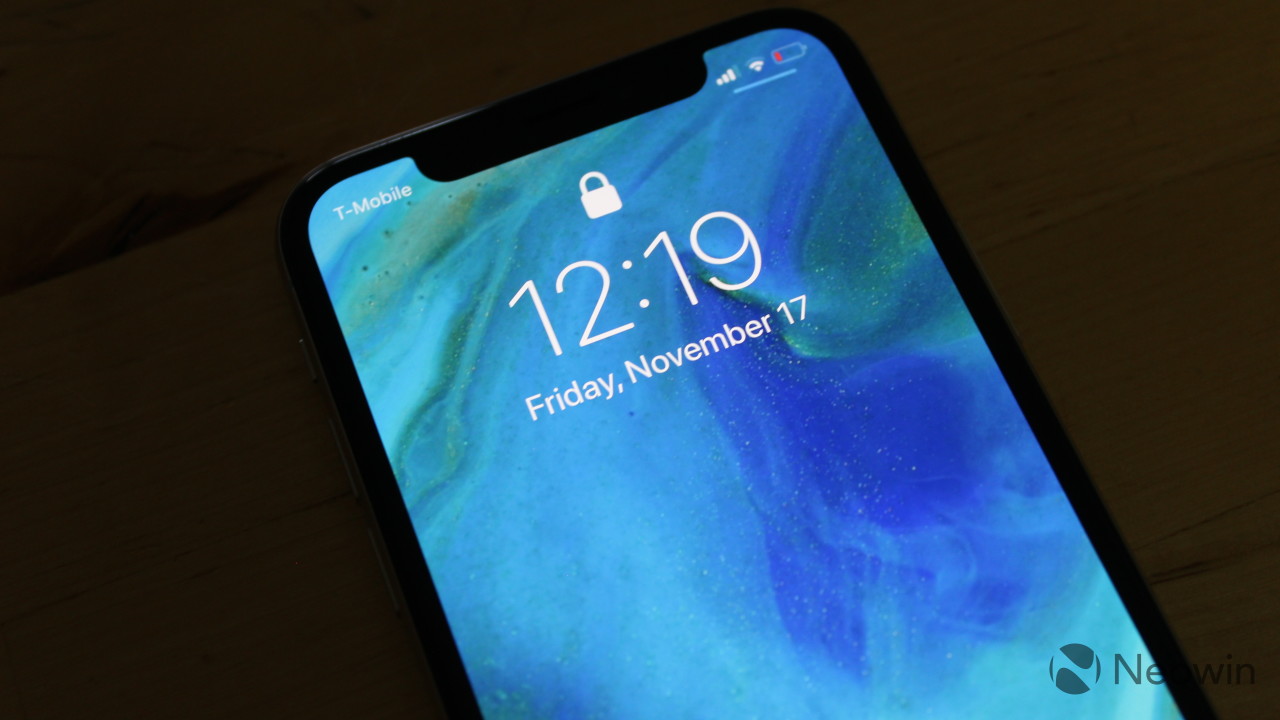
    The iPhone X has narrow bezels all around, except for a small area at the top of the screen. In the corners, you'll find your battery indicator, cellular status, and things like that. And here's the thing: while I don't love or hate the notch itself, I'll still take it over the massive bezels of the iPhone 8 Plus, which I also reviewed.

    Another thing that I really appreciate is that while the bezels are very slim, Apple didn't go overboard, which is something that I'd argue that Samsung did. Samsung uses its 'edge' display, so it can actually make it hard to hold properly.

    Samsung makes the Super AMOLED display, and just as you'd expect from a Samsung OLED screen, it looks awesome. The colors are vibrant, and the blacks are black.

    If you're not familiar with OLED, it stands for organic light-emitting diode. Compared to LCDs (liquid crystal displays), OLEDs produce true black colors because individual pixels can be turned off. LCDs are entirely backlit, which is why when your TV shows you something black, you can still tell that it's on.

    There are different kinds of OLEDs, and AMOLED is active matrix. All you really need to know is that AMOLED is better than alternatives like P-OLED, but that's very broadly speaking. There's plenty of material online if you want a really deep dive on this stuff.

    As for the rest of the design, it's 70.9mm wide, making it much smaller than a Plus model iPhone. It feels much more like a standard iPhone 8 when holding it, which is great. I've always preferred the non-Plus iPhone for the form factor, but have used the Plus for the battery life.

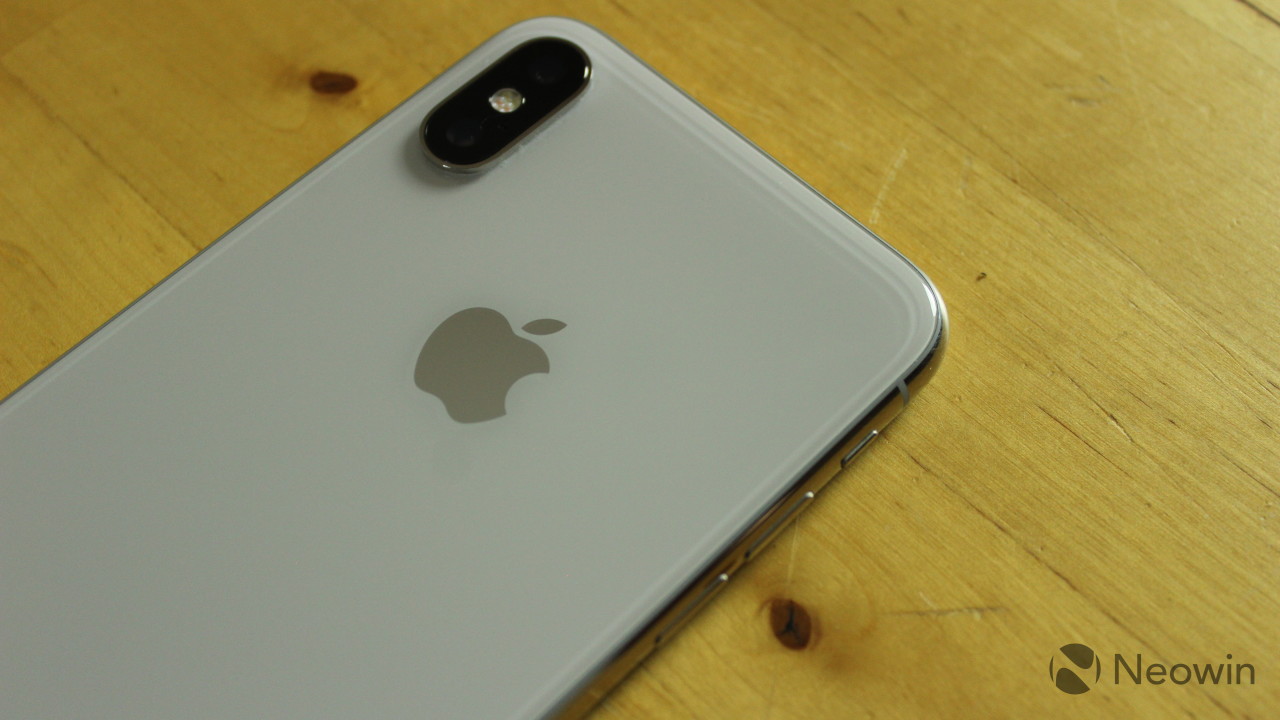
    The frame of the phone is stainless steel, so it will certainly scratch, although you should be able to polish it out using old iPod tricks like, you know, using polish. I got the silver model, so the back is white (rather than silver) and covered in glass, which allows for wireless charging.

    On the right side of the device is the power/sleep/wake/Siri button, and on the left is the volume rocker and toggle to turn sound on or off. On the bottom, you'll find a Lightning port, microphone, and a pair of speaker grilles, just like you'd expect.
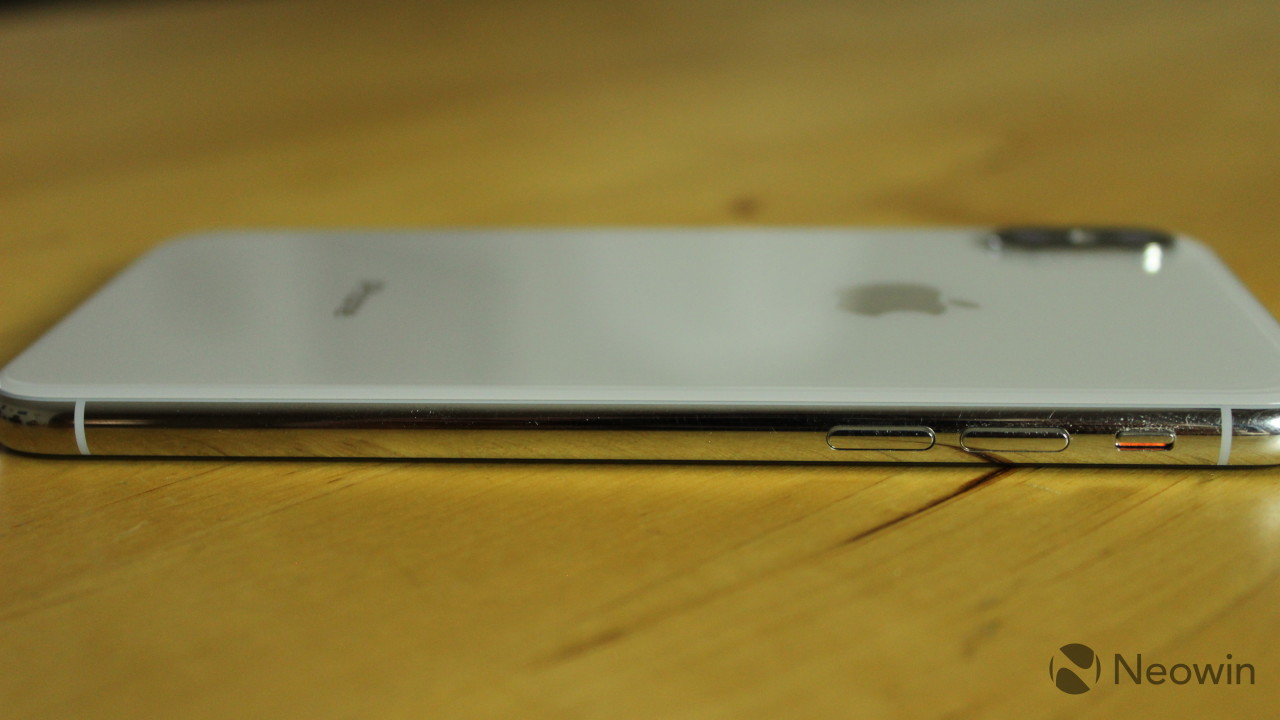
    Apple switched up the camera design for this model. The dual camera configuration is now vertical instead of horizontal, probably just so it stands out from the iPhone 8 from the back.

    UX

    Just as much of a change as the design is, the user experience is completely different, and there are parts of it that I just don't understand, but we'll get to that.

    There's no Home button anymore, so to return to the Home screen, you'll need to swipe up from the bottom. To get to the multitasking screen, you need to swipe up from the bottom, and hold the middle of the screen for a second. Since you can no longer access Control Center by swiping up, you need to swipe down from the top-right corner to do that. The notification center is the same, and you can get there by swiping down from the top.
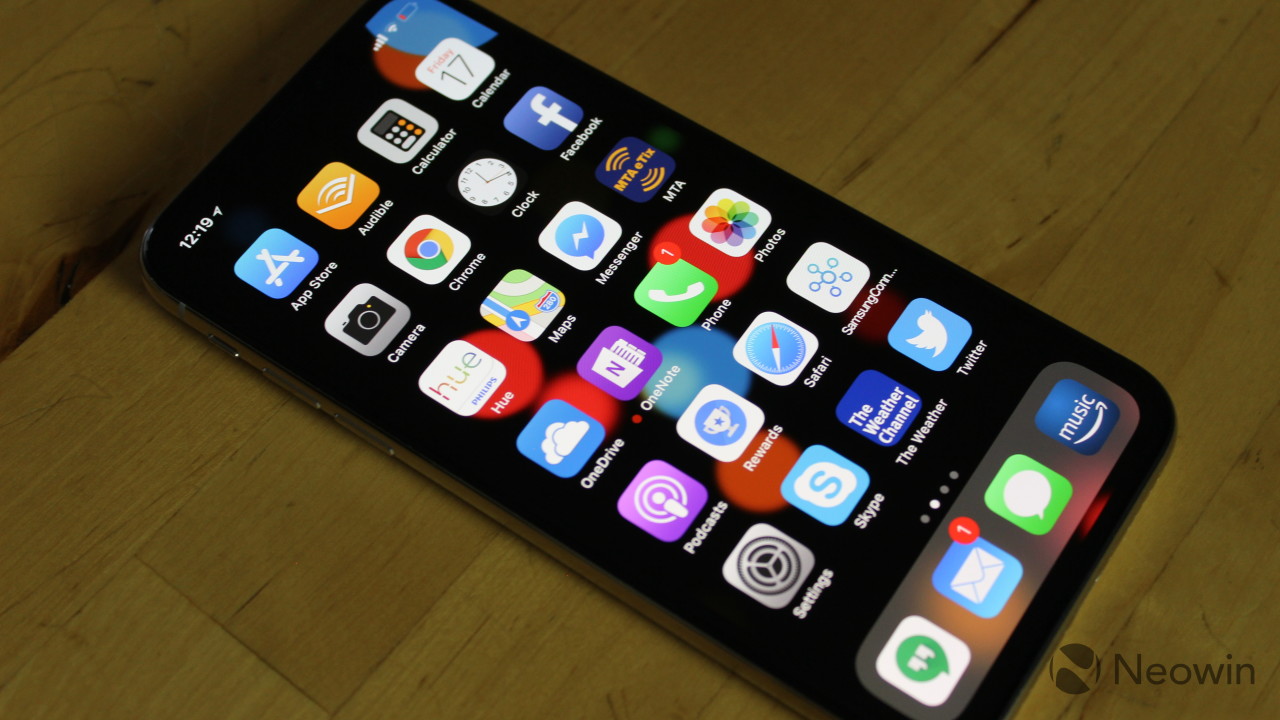
    So, here's where it gets a little weird. If you go to the multitasking screen to close apps, you can't just swipe them away anymore, for some reason. Now, you need to hold the tab for a second, and then you can swipe them away or tap the new '-' icon.

    There are other things that have changed for seemingly no reason as well. There's now a line at the bottom of the screen that represents where you should swipe up from, and if you swipe to the right from there, you can go to the last app that you used. Because of this, you can no longer 3D Touch from the left side of the screen to switch apps.

    And that 3D Touch action seems like it should have been the logical way to launch multitasking and switch between apps, as it was already built into the app. But it would seem that Apple has chosen otherwise.

    Siri can be launched now by holding the power button, which makes sense and is easy to get used to. In fact, everything is pretty easy to get used to; it's just that some of the changes seem unnecessary.

    Face ID

    I had very low expectations for Face ID, mainly because I've never seen facial recognition work well on a phone. It's great on laptops, since your face is already positioned in front of the screen, but that doesn't work out as well with a phone that might be in different positions. I really thought that I was going to buy the iPhone X, miss the Home button, and return it for an 8 Plus.

    But that's not the case. It actually really works well. In general, the bar for biometric authentication for me is whether it ends up being more convenient to use a PIN over time, and the iPhone X does very well in that area. But this is an iPhone, and Apple set the standard for fingerprint sensors on phones with Touch ID on the iPhone 5s.
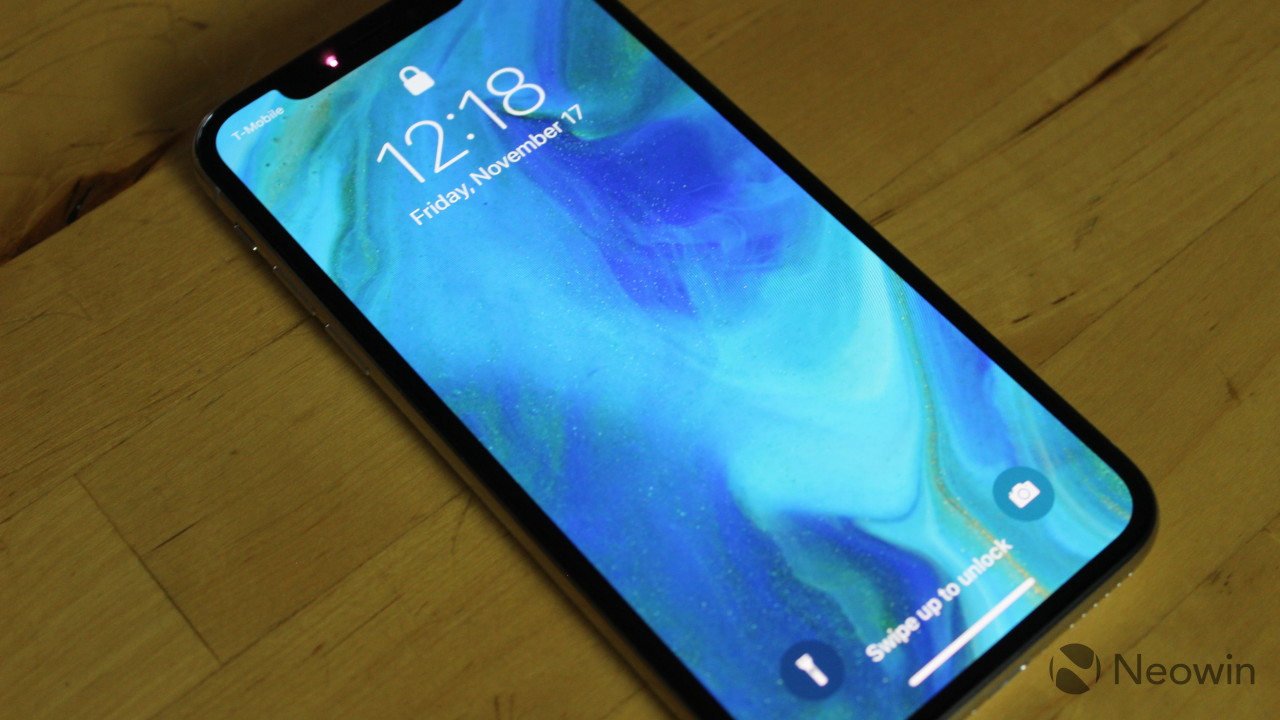
    And no, Face ID still has a bit of a way to go before it's as fast as Touch ID. For me, it's really only a matter of speed, as accuracy is about the same. There's the occasional time that the X doesn't recognize me, such as when I'm in bed and looking at it with my eyes squinted at a weird angle, but it doesn't happen any more often than when Touch ID didn't recognize me, such as if I just washed my hands in the bathroom. When it comes to accuracy, they both have their faults.

    I was pleased to see that Face ID does work from various different angles. I was very afraid that I'd have to position the phone as awkward angles just to get it to unlock, similar to Microsoft's iris recognition on the Lumia 950.

    If Apple can speed up Face ID a little bit, I think that this can actually be better than Touch ID. Facial recognition is awesome when it's implemented properly on anything. Because when it works, it's like having no security at all, and that's what we all want. We want the ease of no security, but with actual security.

    Animojis

    When Apple first announced this phone, I thought that Animoji were the stupidest thing in the history of stupid things. As it turns out, they're slightly less stupid than that.

    They're actually a lot of fun, at least as a novelty. I'm pretty sure that I won't be using these things at all within the next six months, but for now, it's a fun way to send messages to friends. You can record messages of up to 10 seconds, using any of 12 emoji.

    The above message was one I sent to a friend after getting tickets for Justice League. You can download the video after you send it, although it only seems to be 480p.

    It really just feels like it's a showcase for the new face sensors that are included in the iPhone X. It uses those sensors to capture your facial expressions and then put that on an emoji. It's also something that can almost certainly be done with just a standard front-facing camera, but again, Apple is showing off its new technology.

    Animoji aren't exactly a reason to shell out $1,000 for an iPhone X, and really shouldn't even make your top five reasons. Still, they can be a lot of fun.

    Rear camera

    You'll never hear me say that a certain smartphone camera is the best. That's simply an impossible determination to make. The truth is that different things are important to different people. A great example of this is the Nokia Lumia 1020; with its 41MP camera, it took some of the best pictures of its time, but could take over five seconds to launch the camera app and snap a picture, so while the shot came out great, you might have missed your kid's first steps.

    Other features come into play now, such as speed, and the ability to focus quickly. The reason I bring all of this up is because Apple has a new feature called Portrait Lighting, which doesn't make the camera better at all, but it does add some cool effects to your images.
    It builds on top of Portrait Mode, which was introduced with the iPhone 7 Plus. Using the dual cameras, a depth effect is created. With Portrait Lighting, you can choose different lighting scenarios.

    Portrait Lighting is available on the iPhone 8 Plus and the iPhone X. Unfortunately, the feature hasn't been added to the 7 Plus, which just seems odd to me. You don't even need to shoot the photo in a certain Lighting mode. As long as you shoot in Portrait Mode, you can change the filter after the fact.

    Also, Portrait Mode still uses the 2X lens on the camera. This always disappoints me because I end up having to move back to take a picture. Also, it's a lot better than it used to be in different lighting conditions, but sometimes I found myself struggling to get the shot I wanted.

    As far as the rest of the camera goes, it works the same way as it did with the 7 Plus. There are two lenses, one of which offers a 2X zoom.

    Typically, the way zoom works on smartphones is a digital zoom, meaning that the camera can see a certain amount of the scene, so the more you zoom, the more quality that you lose. Having a second lens for a 2X zoom means that you're not losing quality.

    That secondary lens has been improved for the X (not for the 8 Plus), and it has a larger f/2.4 aperture, compared to the former f/2.8. This means that it's better in low-light scenarios, which is great news, especially since it's the lens that you have to use for Portrait Mode.

    As you can see, I did use Portrait Mode for some of those images too, although I didn't mess around with Lighting. Also, it's worth noting that Apple still only lets you take pictures at a 4:3, at least through conventional means. You can take a 16:9 picture by capturing still images while recording video (on a side note, those 16:9 images are of an act called The Red Trouser Show, and you should totally check them out if they come to your neighborhood).

    I was impressed with the pictures I took. Even Portrait Mode, which used to be terrible, is a lot better than now. The wider aperture on the secondary camera makes low light images look much better, although they're still not as good as I had hoped.

    I was also disappointed at how blown out street lights looked. This is, of course, a common problem in smartphone cameras, and you can adjust the exposure, but then the whole image comes out darker.

    One more thing to note is that Apple's new iPhones all record 4K video at 60fps. While they currently have the honor of being the only phones in the world that do that, the video files aren't compatible with much. I couldn't edit them in Adobe Premiere Pro, and converting them to another format lowered the frame rate.

    This has been an issue with other phones before, because it uses the new HEVC format. Apple added a toggle between high efficiency and most compatible with iOS 11, and unfortunately, 'most compatible' isn't an option if you select 4K 60fps.

    Fortunately, YouTube has adopted support since the last time we wrote about this.

    The good news is that more software will adopt support eventually. It's only an issue for now.

    Front camera

    The front camera is a major selling point of the iPhone X, because the sensors used for Face ID do a lot more than that. It allows for Portrait Mode and Lighting for selfies, and it also enhances regular images.

    One thing that I always feel the need to point out in an iPhone review is that there's a really annoying bug. When I upload images taken with the front camera, they show up as upside-down, so I had to open some of these images in third-party software and save them as separate files. Oddly, this is not an issue with Portrait Mode images.

    The front-facing camera itself hasn't really been improved; it's mainly the sensors around it. As you can see, it's still pretty bad at night-time. You can, of course, use the screen as a flash.

    Battery life, fast charging, and wireless charging

    One of the reasons that I've always loved the Plus-sized iPhones is because they get great battery life, and I never have to worry about getting through the day. Despite a larger 2,716mAh battery in the iPhone X, I found that it's not quite as good.

    Ultimately, the X will get you through the day on moderate usage, and for me, that's probably about 85% of the time. When I'm using more features more frequently, such as on a long trip where GPS and Bluetooth are being used for hours on end with a lot of screen-on time, it doesn't make it.
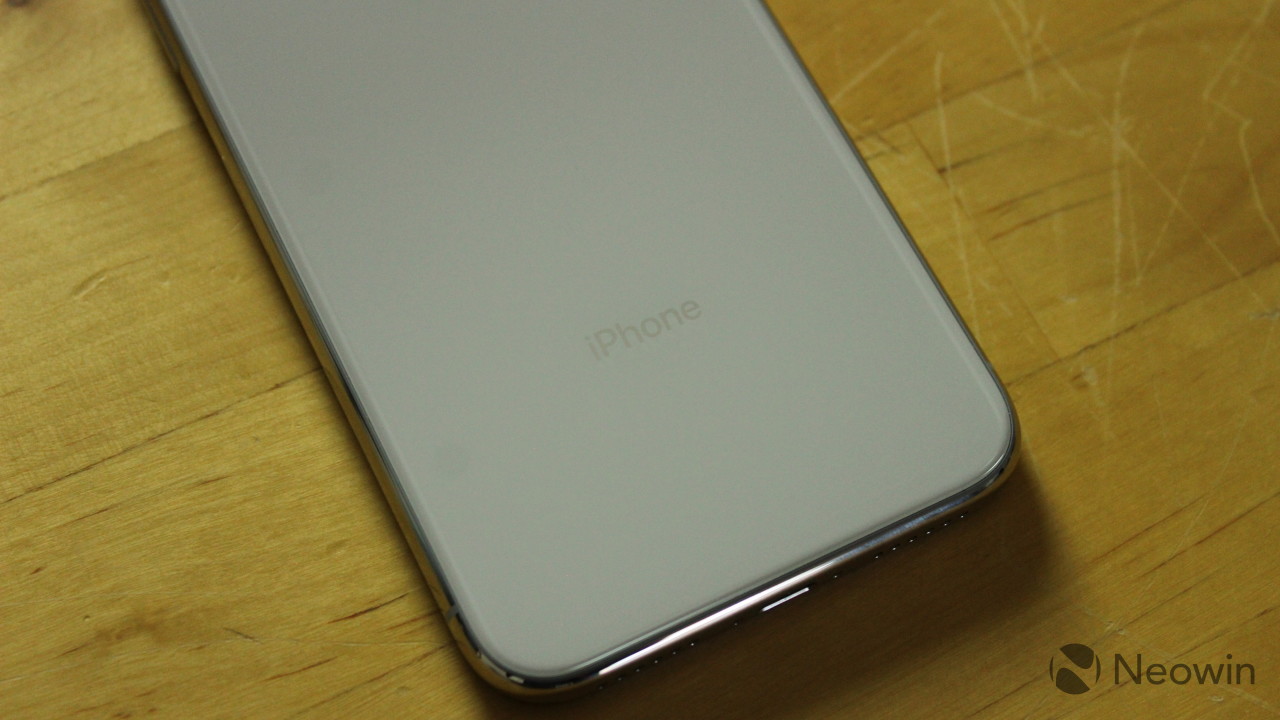
    This year's round of iPhones is the first to support fast charging and Qi wireless charging. Unfortunately, your new thousand-dollar device comes with a charger supporting neither of those things. It comes with a standard 5W USB Type-A adapter, and a USB Type-A to Lightning cable.

    For fast charging, you'll need to replace both of those, for a minimum price of $74. The Lightning cable needs to be swapped out for a USB Type-C to Lightning cable, and the adapter needs to be at least the 29W USB-C Power Adapter.
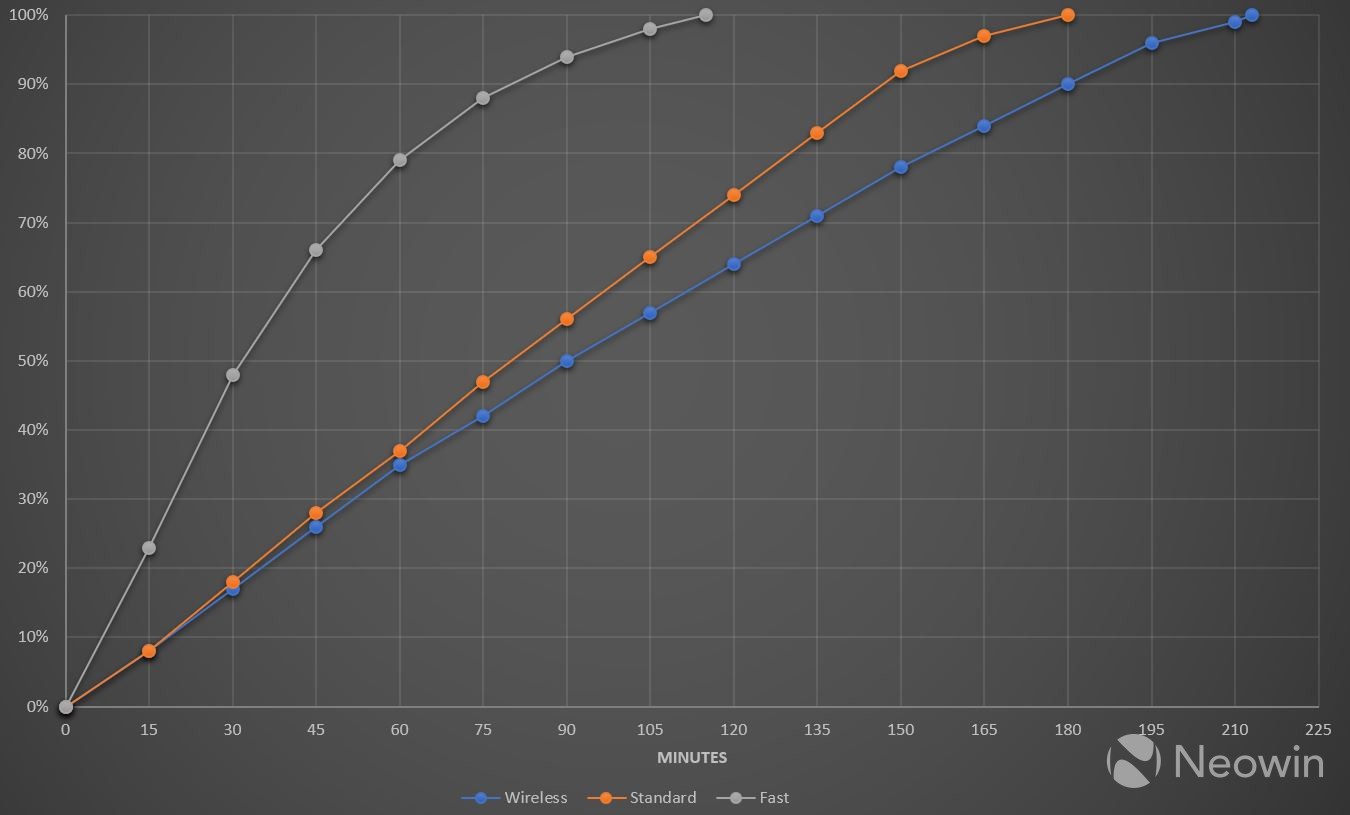
    For the above tests, standard charging used the 5W USB Type-A adapter that comes in the box, fast charging used a 29W USB-C Power Adapter, and wireless charging used a Samsung Wireless Fast Charger. The device was running iOS 11.2 beta 4.

    As for wireless charging, the fun thing about that is that the Qi standard has been around for years, and there are chargers around at all price points. With the upcoming iOS 11.2 update, fast wireless charging should work as well, which is great news because as it stands now, wireless charging is actually slower than using the standard 5W power adapter.

    Despite that, I do find myself using wireless charging most often. It's just so nice to be able to use the same charger for all of my phones. I make this same argument for USB Type-C on laptops.

    Audio quality

    I'm really not the guy that walks around listening to music on his phone speakers; you know, like that guy on the train. Right, that guy, but I digress...

    I did try though, since some have reported crackling issues, and overall poor sound quality. This was not my experience with the device. I thought that it sounded just fine, like any other modern iPhone.
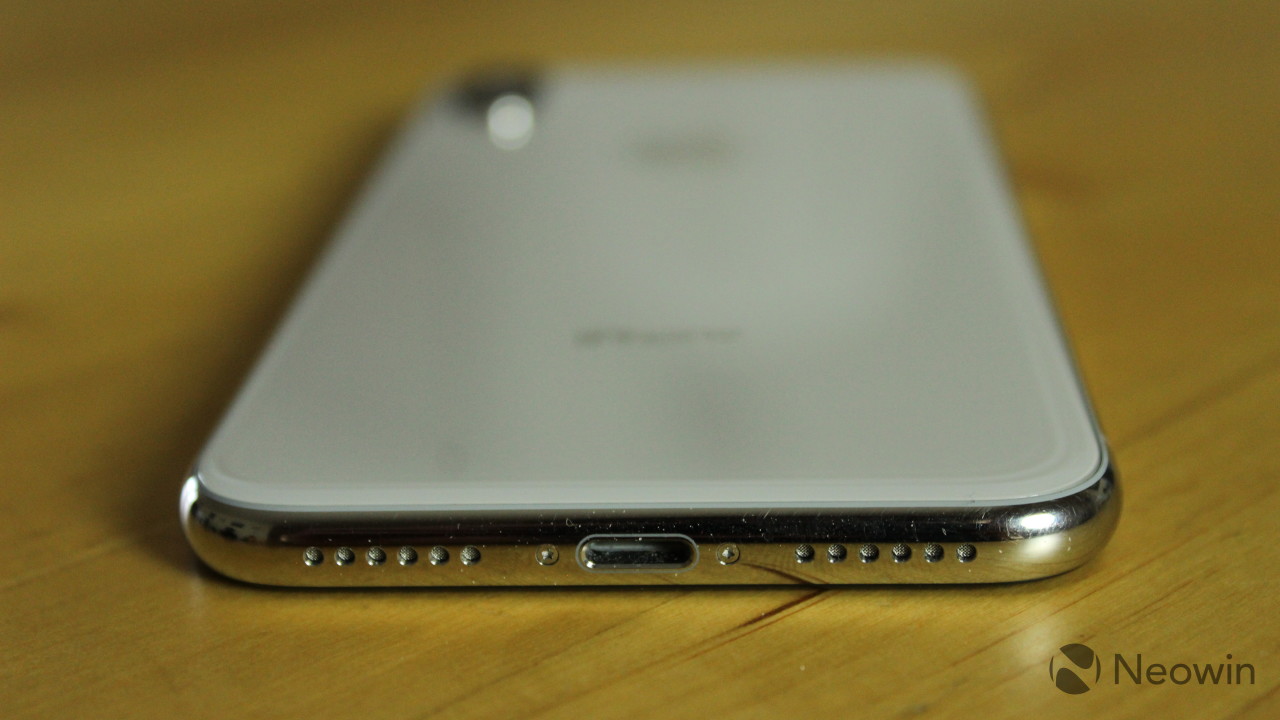
    One issue that I did have was that it would randomly change the volume when my hands weren't anywhere near the volume rocker. It wasn't a major thing, as the volume indicator would only move by a couple notches, but it was just weird.

    Known issues

    When I reviewed the iPhone 8 Plus, I said that I've never had so many issues with a phone. That's not been the case with the X, but there are certainly some things to be aware of.

    For one thing, GPS is still absolutely terrible. Apple says that it's working on a fix, but it can be a real pain when you're trying to get walking directions and your phone thinks that you're jumping back and forth between a two-block area like you're Superman (jumping tall buildings in a single bound, and you should be ashamed of yourself if you didn't get the reference).

    As I mentioned earlier, 4K 60fps video recording is certainly an issue. Apple's new trio of iPhones are the only smartphones in the world that record 4K video at 60fps, but there's only one problem: the videos aren't really compatible with much. You still can't import them into Premiere Pro, and if you try to convert them into a compatible format it will likely get scaled down.

    This was a huge disappointment for me, as I'm a big fan of recording in 60fps, so I'd get the best of both worlds with 4K resolution and the higher frame rate. Sadly, this will require better third-party support before it's a viable option.

    One last thing that I really want to point out is that not all apps have Top Notch support. These apps can be pretty mainstream too, like Skype, and I quickly found myself getting slightly annoyed by apps that are letterboxed when I open them.

    Performance

    The iPhone X includes the same A11 Bionic processor and custom six-core GPU that you'll find in the iPhone 8 and 8 Plus. It's easily the most powerful mobile chipset on the market.

    I review a lot of Android phones, and even those powered by Qualcomm's latest flagship chipset, the Snapdragon 835, can struggle to play games with a lot of moving parts. The iPhone is always very smooth.
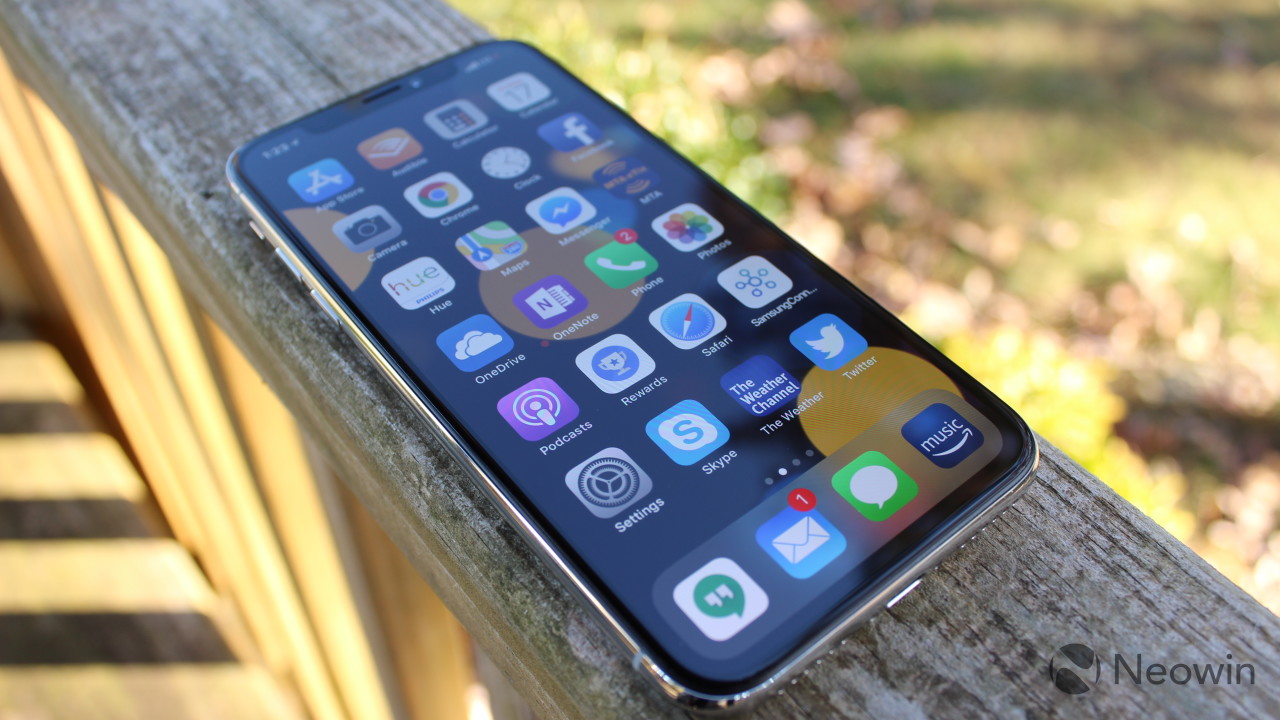
    One thing that's an issue with the X, as I mentioned above, is that not all apps support the notch yet, which means your favorite game won't fill the screen. For example, if you're a fan of Plants vs Zombies and don't care for Plants vs Zombies 2, you're probably not going to get proper support. This might be a poor example, but there are plenty of games that don't get updated after a time.

    Performance is one thing that you never have to worry about in a new iPhone, as Apple's custom chips stay far ahead of the competition, and have been doing so for some time. Still, I ran some benchmarks using AnTuTu, Geekbench 4, and GFXBench.

    First up is AnTuTu, which tests a bit of everything.
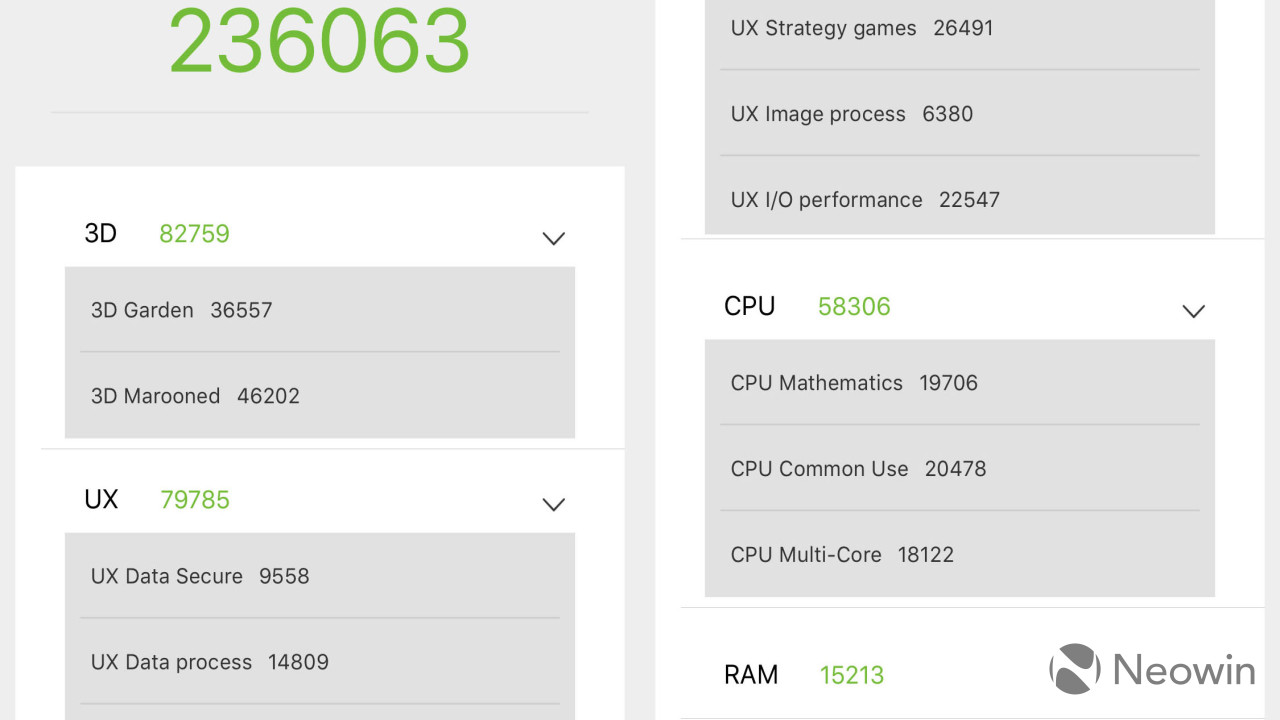
    The above score of 236,063 can be compared to the Snapdragon 835-powered Samsung Galaxy Note8, which scored 173,562. The iPhone X outperformed Samsung's flagship in all tests except UX Image Process.

    Next up is Geekbench 4, which tests the CPU.
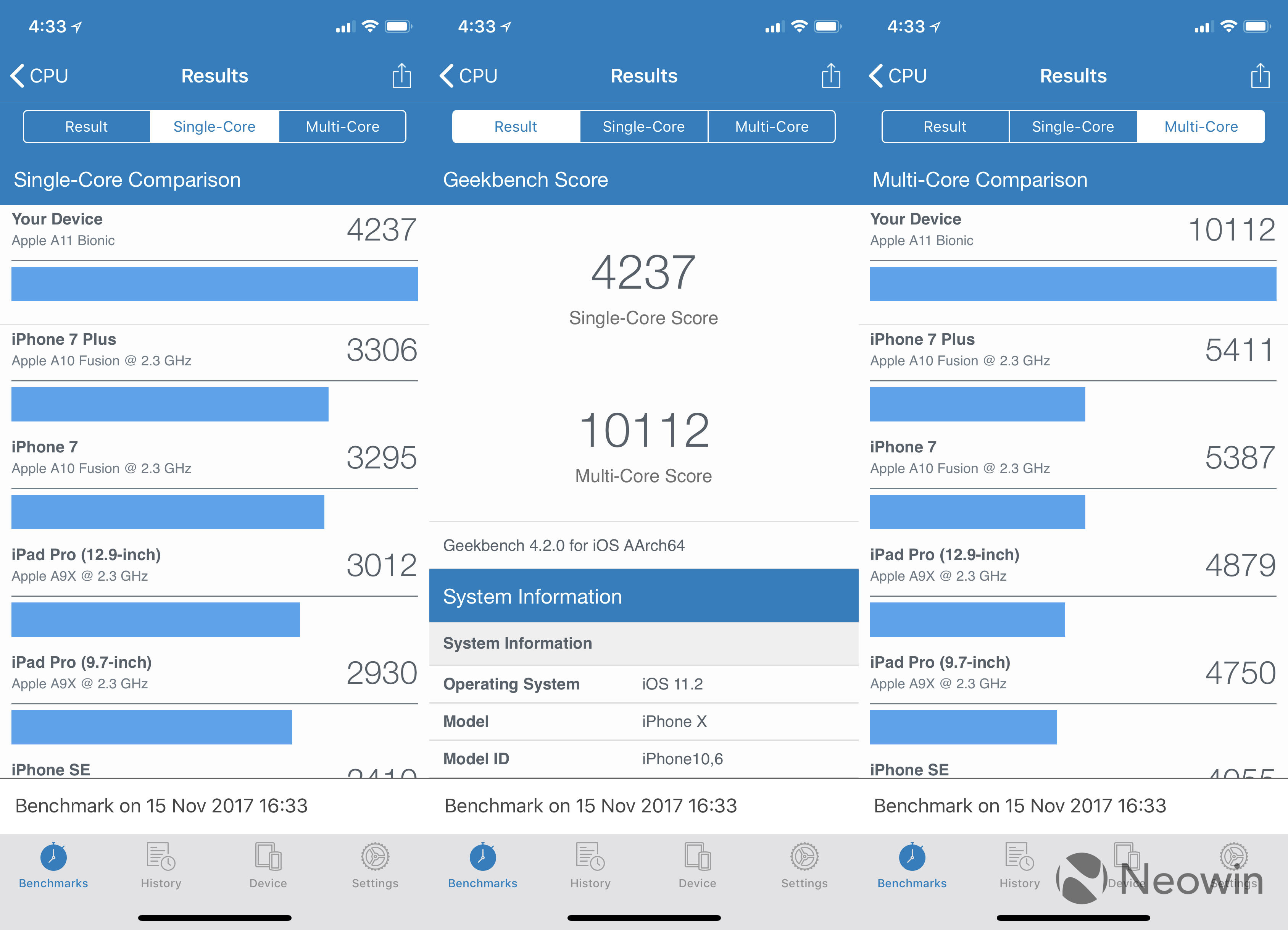
    This again can be compared to the Note8's single-core score of 1,866 and multi-core score of 6,539. Apple has always done well in this area though, particularly single-core.

    Finally, GFXBench tests the GPU.
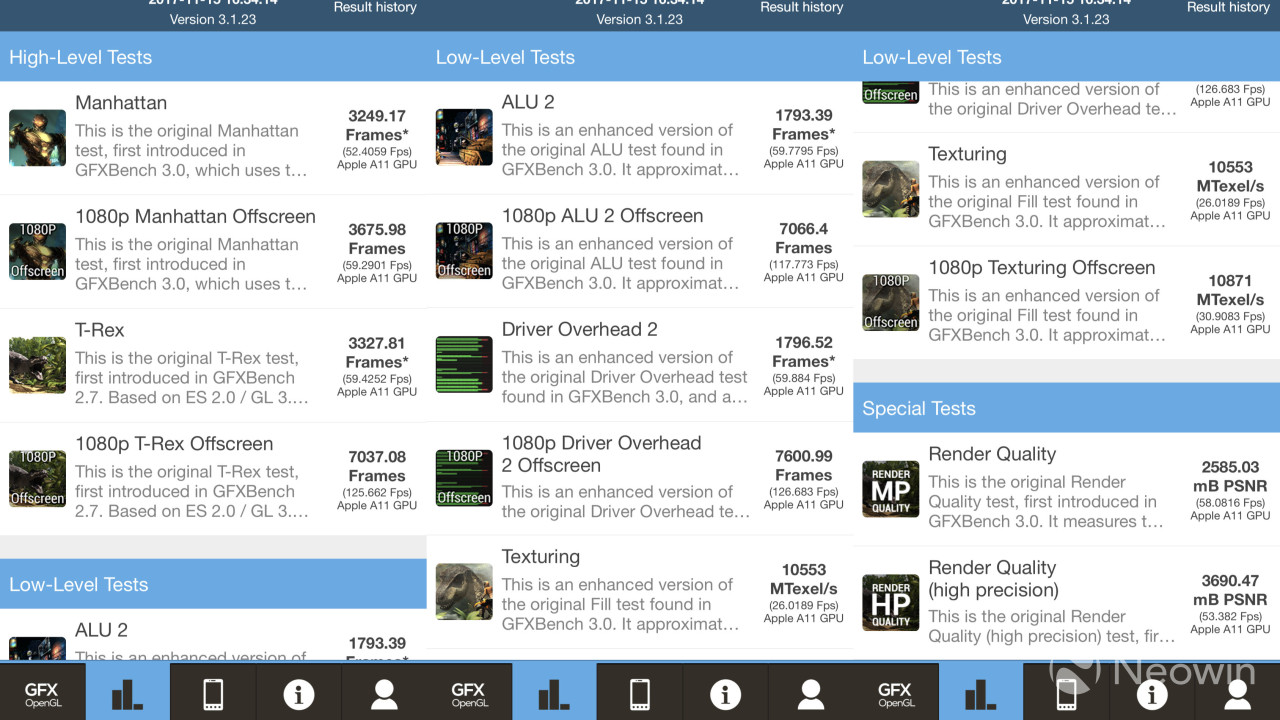
    This is actually the first year that Apple has made its own custom GPU, and it performs quite well.

    Conclusion

    I'm going to be honest here; I really love this phone. Most people I know get a new iPhone and their number one complaint is that it just doesn't feel like a new phone. After all, why would it? The form factor is the same, as is the software. You probably even restored from an iCloud backup.

    The iPhone X actually feels new, in a good way. My two main concerns with the phone were the UX changes and Face ID.
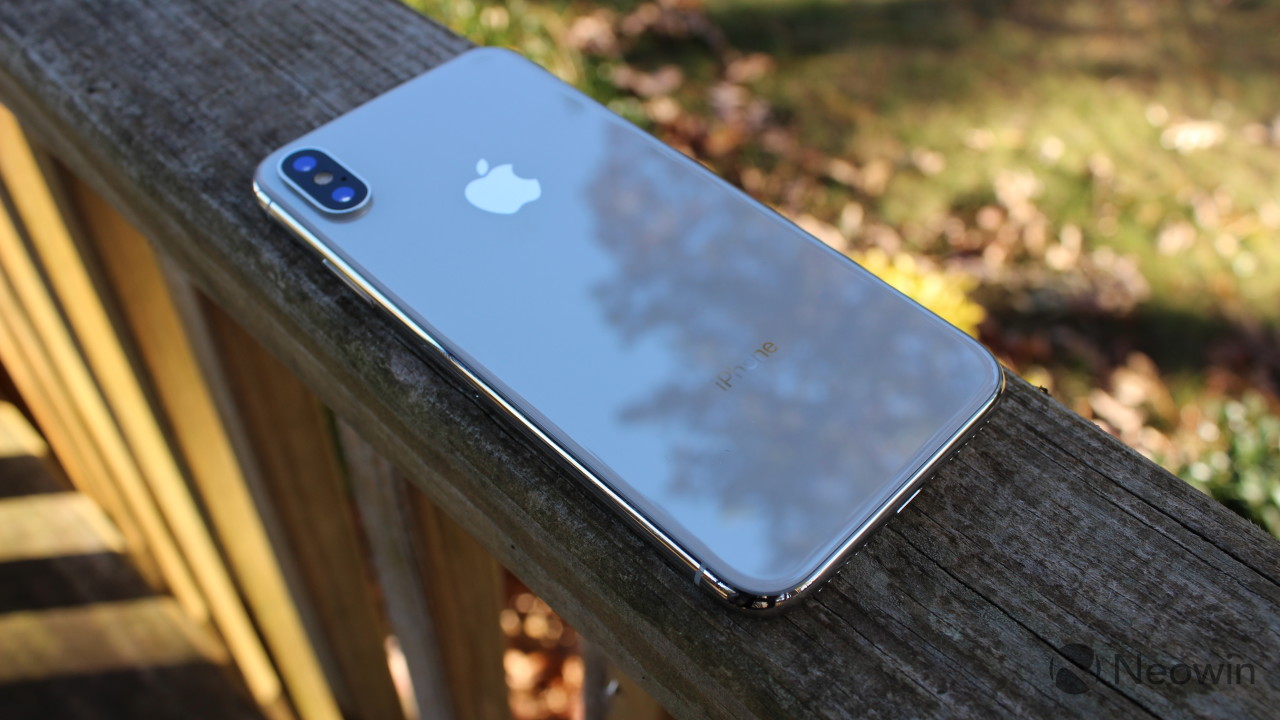
    As it turns out, it took very little time to get used to how to interact with my new phone. Sure, maybe once every few days I try to hit a Home button that isn't there, but it happens less and less.

    And Face ID is really good. I was so afraid that it would force me to hold the phone in front of my face at an awkward angle, but it works as advertised. It's accurate too, as accurate as Touch ID, in my experience. It's not quite as fast, but that should be something that Apple can speed up with software. And still, it's not exactly slow.

    Aside from those two things, the phone is great. The AMOLED display is top notch (pun intended), it has an excellent camera, and performance is unparalleled.

    Most of the issues that I've had have to do with software, and Apple has been fixing them. As for 4K 60fps video support, that's going to be up to third-party vendors like Adobe. Until then, I'll be sticking with 1080p 60fps.

    The other issue, of course, is the price. The iPhone X starts at $999, and if you plan on recording a lot of videos, you'll probably want the 256GB model for $1,149. I actually don't think that's unreasonable with Samsung selling the Galaxy Note8 for $930, but it's really not cool that Apple doesn't at least include a fast charger.

    Indeed, it seems that the time is gone when you could buy an Apple product and have everything you need in the box. Still, Apple products have always been for those that don't mind paying a bit more to get the best.

    And the iPhone X actually is the best overall phone, as far as hardware goes. The display is on par with anything else out there, as is the camera, which can record 4K 60fps video. Performance is far and away better than anything else on the market too.


    Source: iPhone X review: Apple's new flagship is top notch

    Galaxy S9 price, release date and specs: Samsung plans souped-up iris scanning tech to take on Face ID

    THE GALAXY S8 may have arrived on shelves mere months ago, but reports claim that Samsung has already started production of next year's flagship: the Galaxy S9. 

    We've done some digging, and this isn't all we know about the so-called Galaxy S9, so we've rounded up everything we know about the handset so far. 

    Specs- 5.8in / 6.2in QHD+ Super AMOLED curved display (570ppi / 529ppi)- Android 8.0 'O'- Qualcomm Snapdragon 845 (US) / Samsung Exynos (UK)- Cat 18 LTE support (1.2Gbps download speeds)- Display embedded fingerprint scanner- Dual rear-facing camera- Bixby AI assistant with dedicated button- USB-C

    Release dateWith reports claiming that Samsung will start production of the Galaxy S9 and S9 Plus this year, it's likely that the handsets will debut earlier in the year than the Galaxy S8, and hints that Samsung could be planning a launch at next year's MWC.

    This has been further fuelled as the displays look set to arrive in November, which puts the final delivery date, based on previous timings, in January.

    PriceThere's no word yet on pricing for the Galaxy S9 and S9 Plus. If anything like the S8, expect handsets to fetch around £689 and £779 SIM-free.

    Latest news20/11/17: Samsung plans to equip the Galaxy S9 with souped-up iris and face recognition tools, according to a report at ET News. The report claims that the firm is "developing software to increase the face recognition rate of the Galaxy S9 front iris recognition sensor." Industry insiders claim that these improvements come as Samsung looks to take on Face ID, which Apple is touting as the most secure face-scanning tech on the market today.

    17/11/17: New benchmark results for a Samsung smartphone with the model number SM-G960F - widely expected to the global version of the Galaxy S9 - have appeared on the Geekbench website. The handset, which likely will come powered by Samsung's new Exynos 9 Series 9810 processor, scored 2680 on the single-core Geekbench 4 test and a 7787 on the multi-core test. While impressive, this puts the device far behind the iPhone X, which scored a single-core score of 4197 and multi-core score of 10051.

    15/11/17:  Just a day after rumours claimed that Apple was planning to launch three new iPhones in 2018, Ice Universe (via ValueWalk) claims that Samsung is going to beat the firm to it by reviving its 'mini'' line next year. The tipster claims that the so-called Galaxy S9 Mini will launch alongside the S9 and S9+, and will tout a 5in(ish) Infinity display. 

    14/11/17: SlashLeaks has posted CAD drawings supposedly belonging to the Galaxy S9, which 'confirms' that the smartphone will be a full-screen device with far slimmer bezels than those seen on the Galaxy S8. The image also confirms that the smartphone will sport Samsung's signature curved edges, while a second CAD render shows a vertically-aligned dual camera setup on its backside and a rear-facing fingerprint scanner. However, we'd advise taking this latest leak with a pinch of salt, as reputable tipster @OnLeaks has tweeted that the images are "very likely fake, or at least inaccurate."

    9/11/17: South Korea's The Investor reports that, due to "technical difficulties" in developing an under-screen fingerprint sensor, Samsung will stick the scanner on the back of its Galaxy S9 and S9+ handsets. This rumour comes amid speculation that Samsung could ditch the sensor altogether in favour of Face ID-style face recognition technology, but an industry source debunked this to The Investor, saying: "Samsung won't get rid of fingerprint sensors in its handsets, as there many services and platforms run based on the technology."

    3/11/17: Samsung has launched a public beta for Experience 9.0, its take on Android Oreo that will show up on 'the next Galaxy flagship', no doubt the Galaxy S9. As of 2 November, some Galaxy S8 and S8 Plus owners in the UK, US and South Korea will get to try out the next-gen UI, which comes complete with a GIF keyboard, a game mode for DeX and more flexible Samsung Cloud file storage

    31/10/17: Face ID-style tech isn't the only feature the Galaxy S9 will borrow from the iPhone, as a new leak suggests that Samsung's upcoming flagship will be the first to ditch the headphone jack. TechDroider has posted sketches (below) of the upcoming smartphone, which as well as reigniting speculation that Samsung is testing an under-screen fingerprint sensor, 'confirms'' that the 3.5mm jack will be ditched.

    30/10/17: The Galaxy S9's rear panel will "change a lot", according to Twitter tipster Ice Universe, who failed to elaborate on his claims. However, it's expected that Samsung will ditch the rear-facing fingerprint sensor, and there's also talk that the S9 and S9 Plus will feature a dual camera setup similar to that seen on the Galaxy Note 8. 

    27/10/17: We've already heard that the Galaxy S9 likely will follow the iPhone X with baked-in Face ID-style tech, and now new rumours are claiming that the firm will also, like Apple, ditch the fingerprint scanner altogether. Reliable tipster Ice Universe has tweeted that he's "100 per cent sure" that the S9 won't have a fingerprint scanner, despite earlier speculation that the handset would be the first to feature a screen-embedded sensor. 

    26/10/17: Samsung will reportedly integrate its own neural engine into the Exynos version of the Galaxy S9. The Korea Herald writes that Samsung has ploughed money into DeePhi Tech, a startup from China that specialises in neural network compression technology. Samsung is said to be interested in using this technology, which allows for instantaneous speech recognition, neural language processing and other recognition tasks on smartphones, into its upcoming flagship in a bid to improve its AI capabilities.

    13/10/17: While Samsung's current Galaxy S8 and Note 8 both feature built-in iris scanners, rumours claim that Samsung will adopt iPhone X-style Face ID tech on next year's Galaxy S9. A tweet from Ice Universe, via SamMobile, claims that the firm will equip its upcoming flagship with a 3D image mapping sensor, which will be capable of scanning users' faces from all angle. There's no word yet as to whether the firm will also ditch the fingerprint scanner found on current models. 

    10/10/17: Russian tipster Elder Murtazin has 'confirmed' previous rumours that Samsung will have first dibs on Qualcomm's upcoming Snapdragon 845 CPU. He said on Twitter (below, er, in Russian) that the entire first production run of the new chipset will be sold to Samsung, with other OEMs getting access to the 845 at a later date. 

    4/10/17: In a hardly surprising development, SamMobile has confirmed that there will be two versions of the Galaxy S9. The site discovered two model numbers for the handset - G960FXXU0AQI5 and G965FXXU0AQI5 - the first of which allegedly belongs to the Galaxy S9, and the latter to the Galaxy S9 Plus. The report doesn't reveal much else about the upcoming flagships, but it does add weight to rumours of an early-2018 launch. 

    26/9/17: Samsung is reportedly planning to follow in the footsteps of Huawei by developing a dedicated artificial intelligence (AI) chip, which could make its debut inside the Galaxy S9. The Korea Herald reports that "[Samsung] is in the middle of developing several types of chips that will be capable of processing massive data from AI applications on devices, eliminating the need to communicate with cloud servers."

    19/9/17: The Galaxy S9 could pack a camera sensor capable of shooting 'super slow motion' footage at 1,000fps, according to ETNews. It reports that the camera sensor will use stacked image sensing tech similar to the Sony Xperia XZ1, with the ability to temporarily store captured images on a DRAM chip in one of the layers. Samsung will start mass producing the '3-layered image sensor' in November, according to the report. 

    6/9/17: A patent (below), which has recently been approved by Korean Intellectual Property Rights Information Service, suggests that the Galaxy S9 could feature a cutout at the top of its display, similar to that expected to feature on the iPhone 8. Alternatively, the firm could be planning to introduce a notched display on a new smartphone altogether. 

    18/8/17: Just days before Samsung unveils its next flagship, the Galaxy Note 8, a help load of information about the Galaxy S9 has appeared online. The first rumour comes via well-known tipster Elder Murtazin, who claims that the 2018 flagship could feature a 'MotoMod' style modular design, allowing users attach external modules via magnetic pins on the rear of the phone. Separately, a post over at Weibo claims that Samsung will be 'hoarding' 2018's initial supply of Snapdragon 835 chips for ahead of the Galaxy S9 launch.

    31/7/17: Samsung has announced the 'industry's first' Cat 18 LTE modem with 6CA support, and it'll probably make its debut inside the Galaxy S9. The modem, set to go into production earlier this year, can reach download speeds of 1.2Mbps, a 20 per cent increase compared to the 1Gbps modem inside the Galaxy S8.

    18/7/17: Korean news outlet The Investor is reporting that the Samsung Galaxy S9 will feature the same 5.8in display as the Galaxy S9, while the bigger S9+ will feature the same 6.2in screen as the current Galaxy S8+. The report notes that Samsung 'is likely to attempt again to feature on-screen fingerprint scanning that is missing from the S8 due to technical immaturity.'

    28/6/17: Despite recent chatter that Samsung wouldn't offer a Snapdragon variant, new rumours suggest that the Galaxy S9 will use both its own 8nm Exynos chips and an as-yet-unannounced 7nm processor out of Qualcomm. The same report claims that TSMC will make the upcoming Snapdragon chip, rather than Samsung.

    23/6/17: Speculation over at Weibo claims that the Galaxy S9 might not come in a Snapdragon variant, with the smartphone instead shipping only with Samsung's own Exynos 9810 processor, complete with CDMA network support. If this rumour is legit, it would mean that Qualcomm and Samsung have reached an agreement in relation to a CDMA patents issue.

    12/6/17: The Galaxy S9 will be the first Samsung smartphone to boast new AMOLED screen tech codenamed 'Sunflower', according to a report at Android Headlines. Tech specs haven't yet been confirmed, but it's likely Samsung is looking to improve the display fidelity.

    24/5/17: The Bell reports that production of the Galaxy S9 will likely start as soon as this year, with Samsung having settled on the codenames Star and Star 2 for the Galaxy S9 and Galaxy S9+ smartphones. The report also notes that S9 and S9 Plus will have "similar specs" to the Galaxy S8 and S8 Plus, and won't feature Samsung's foldable display tech. 

    21/4/17: Reports claim that Samsung and Qualcomm have started developing the so-called Snapdragon 845 processor - based on the second-gen 10nm manufacturing process - which is tipped to debut inside the Galaxy S9. 

    1/4/17: Korean publication The Bell claims that Samsung has  started work on the display panel for the Galaxy S9 and S9 Pus. It doesn't say much else, but notes that the screen will be similar to that found on the Galaxy S8, and will be made available in the same 5.8in and 6.2in sizes. µ 


    Source: Galaxy S9 price, release date and specs: Samsung plans souped-up iris scanning tech to take on Face ID

    Sunday, 19 November 2017

    Razer Phone vs. LG V30: Can Razer topple a smartphone giant?

    Julian Chokkattu/Digital Trends

    Razer has thrown a gauntlet down to the rest of the smartphone market with the Razer Phone. It's a media-consuming beast of a device with stereo speakers, 8GB of RAM, and a buttery smooth display that has to be seen to be believed. But how does Razer's monster stack up against the competition? LG's V30 is a stylish, powerful Android smartphone with some serious video shooting s kills. We took the LG V30 and the Razer Phone and pitted them against each other to see which phone came out on top.

    Specs Razer Phone razer phone LG V30 iphone x vs. lg v30 Size 158.5 x 77.7 x 8 mm (6.24 x 3.06 x 0.31 inches) 151.7 x 75.4 x 7.4 mm (5.97 x 2.97 x 0.29 inches) Weight 197 grams (6.95 ounces) 158 grams (5.57 ounces) Screen 5.7-inch 120 Hz Ultramotion IGZO IPS LCD display 6-inch P-OLED display Resolution 2,560 x 1,440 pixels (514 ppi) 2,880 x 1,440 pixels (537 pixels per inch) OS Android 7.1.1 Nougat Android 7.1.2 Nougat Storage 64GB 64GB, 128GB (on the V30 Plus) MicroSD card slot Yes Yes, up to 256 GB NFC support Yes Yes Processor Snapdragon 835 with Adreno 540 Snapdragon 835 with Adreno 540 RAM 8GB 4GB Connectivity GSM, UMTS, HSPA, TD-SCDMA, LTE, TDD LTE, 802.11 a/b/g/n/ac Wi-Fi GSM, CDMA, HSPA, EVDO, LTE, 802.11a/b/g/n/ac Wi-Fi Camera Dual 12 MP rear (f/1.75 wide angle & f/2.6 zoom), 8 MP front Dual 16MP and 13MP wide angle rear, 5MP wide angle front Video Up to 4K at 30 fps Up to 4K at 30fps, 1080p at 30fps, 720p at 120fps Bluetooth Yes, version 4.2 Yes, version 5.0 Audio Dual front-facing speakers, no headphone jack Bottom-firing speaker, headphone jack Fingerprint sensor Yes Yes Other sensors Accelerometer, gyro, proximity, compass Accelerometer, compass, gyroscope, proximity Water resistant No Yes, IP68 rated Battery 4,000mAh

    Qualcomm QuickCharge 4.0+

    3,300mAh

    Fast charging, wireless charging (Qi standard)

    Charging port USB-C USB-C Marketplace Google Play Store Google Play Store Colors Black Cloud Silver, Moroccan Blue Availability Razer Sprint, Verizon, AT&T, T-Mobile Price $700 $800 DT review Hands-on review 4 out of 5 stars

    You're going to see a lot of similarities between these two phones in terms of processing power, as both the LG V30 and the Razer Phone come with the Snapdragon 835. We've seen this processor powering multiple flagship phones this year, including the Pixel 2, the Samsung Galaxy S8, and the Galaxy Note 8. It's a very powerful chip, one of the best in the world, and we expect to see similar performance from the LG V30 and Razer Phone, with any real differences in processing power being negligible. It is notable that the Razer Phone contains a lot more RAM than the V30 — a staggering 8GB against the 4GB in the V30 — but as we like to remind you, the jury is still out on how much impact RAM has on on a smartphone's performance, so while the extra RAM scores Razer some extra points, it's not as big a deal as the numbers might suggest.

    The LG V30 pulls ahead when we start to compare internal storage. Again, both have space for a MicroSD card, expanding available storage, but it's nice regardless that LG offers the choice between a 64GB and a 128GB model (on the V30 Plus) for initial internal storage. The Razer Phone only comes with a 64GB option, which seems small for a phone aimed toward mobile gamers and avid media consumers.

    The LG V30 gets more points for the inclusion of a headphone jack — which is missing on the Razer Phone. Puzzlingly, the Razer Phone also lacks the upgraded Bluetooth 5.0 you'll find in the V30. Since the Razer Phone doesn't include a 3.5mm jack, you'd expect Bluetooth 5.0's improved signal strength and features to be a must-have to make up for the missing functionality, and the lack of it is strange. LG doubles down on audio quality with Quad DAC and AptX included in the V30, but the Razer Phone's stereo speakers and DAC-enabled USB Type-C to 3.5mm headphone jack adapter put up a good fight.

    It's a tough call between the two, and with the extra RAM included, we expect that the Razer Phone will be the slightly superior performer. However, we also anticipate that the difference will be so slight as to not really be noticeable, and the V30's headphone jack, upgraded Bluetooth, and better range of storage options hand LG the win here.

    Winner: LG V30

    Design and display

    Razer Phone review home in hand

    More

    Julian Chokkattu/Digital Trends

    The trend for minimizing bezels has given us some of the most beautiful smartphones we've ever seen. LG is no stranger to this trend, and the LG V30 shows off a gorgeous 6-inch 18:9 screen with tiny bezels around the edges. A larger forehead and chin are present, but they're so small that you'll forget they're there. The OLED display showcases LG's usual great performance, with vibrant colors and dark, inky blacks. Flip over the phone and you're greeted with more smooth glass, mounted on a metal frame. LG has put the V30's glass through rigorous testing, but we still recommend a case to ensure it stays beautiful.

    Story Continues

    By contrast, the Razer Phone is a throwback to an earlier time. Chunkier bezels abound, and the design is close to that of a Sony Xperia, with hard, angular corners and straight lines. Still, we don't mind a different design from time to time, and it does mean that the display is flanked by a pair of seriously impressive stereo speakers. The display itself is a 5.7-inch IPS LED, and it outputs a good-looking image, even if it's never going to match the clarity and color of the OLED screen on the V30. But you need to see the Razer Phone in action to really understand its true strength — a 120Hz Ultramotion screen refreshes at twice the usual rate of smartphone screens, giving motion on the Razer Phone a smooth quality you don't find in many devices (the i Pad Pro may have been the last we saw). It adds an extra "wow" element to an already smooth phone, and really cements Razer's drive for the mobile gaming market.

    The rest of the Razer Phone is aluminum, and while it's nice to handle that reassuring metal again, glass feels so much more premium in 2017. That said, you don't have to worry so much about your phone's body smashing during use, so at least the Razer Phone has that over the LG V30. But what it doesn't have is water-resistance. There's no water-resistance at all in the Razer Phone, which feels like a misste p when compared with the LG V30's IP68 rating.

    All in all, each of these phones has a lot to offer. While the Razer Phone's 120Hz display is a stunning piece of technology, and we have a soft spot for the chunky look, it just can't compete with the futuristic style of the LG V30. Pair the V30's amazing looks with the stunning and massive 6-inch OLED display, as well as the water resistance, and you can forgive the fragile nature of the glass covering.

    Winner: LG V30

    Camera

    Julian Chokkattu/Digital Trends

    This one's a bit more clear cut. While the camera hardware on the Razer Phone is respectable — two 12-megapixel (MP) lenses, one with a 2x optical zoom, and the other a wide-angle lens — we have our doubts about the strength of the software, which is rather bare-bones. The front snapper is similarly standard — 8MP is a good selfie taker, but there's nothing special about it. It's clear that Razer's focus isn't on the strength of the camera. That said, Razer has promised updates to add features to the camera and make certain aspects clearer.

    The LG V30, on the other hand, has a stunning pair of lenses mounted on the back of the phone — a 16-megapixel and a 13-megapixel lens. The 16-megapixel lens has an aperture size of f/1.6 (setting a smartphone record on release), giving a huge amount of light to the sensor, while the 13-megapixel lens is concerned with taking wide-angle shots of up to 120 degrees. It's an incredible combination that we haven't really seen from other manufacturers. Amazingly, LG's focus isn't even on still photos — it's on video. The LG V30 has great capabilities as a camera, coming with 15 "Cine Effects," which dynamically alter the color balance and look of the shot to match your chosen filter. We won't go into greater detail here, but you can check out our LG V30 review if you're interested in knowing more.

    The answer here should be pretty clear — the LG V30 wins again.

    Winner: LG V30

    Battery life and charging

    Razer Phone review bottom profile

    More

    Julian Chokkattu/Digital Trends

    The Razer Phone comes with a huge 4,000mAh battery to fuel that incredible 120Hz display. But that display is a po wer hog, and while we haven't done detailed tests yet, we expect that the Razer Phone will manage to make it through the day on a full charge. There's no wireless charging here, thanks to the aluminum body, but the phone is the first to ship with Qualcomm's QuickCharge 4.0+ technology, which Razer has said can charge the battery from zero to 50 percent within 35 minutes. Given the capacity of the battery, that's quite an impressive feat.

    The LG V30 is no slouch either, with a 3,300mAh battery. While it falls short of the pure numbers of the Razer Phone, the battery life on the V30 is very impressive. Tests during our LG V30 review showed the battery to be capable of well over a day's worth of usage, consistently ending a work day with just under 50 percent battery life remaining. Wirel ess charging is available, and QuickCharge 3.0, while an older product than the upgraded version on the Razer Phone, is still capable of charging the phone with blinding speed.

    The LG V30 has stronger battery life, as well as the option for wireless charging, and that scores it the win.

    Winner: LG V30

    Software

    Julian Chokkattu/Digital Trends

    The LG V30 is running Android 7.1.2 Nougat, overlaid with LG's own customized skin. It's not bad looking, but it's never been one of our favorites. It's got some fun additions to it that might catch your fancy, such as the ability to set Smart Settings that detect when you're home and change the sound profile accordingly. You've been able to get this sort of functionality from third-party apps like IFTTT for a while, but it's nice to see it baked into LG's software. The "Floating Bar" is another of these — replacing the secondary display from earlier V-series phones. It's not quite as good as the secondary display was, but it does give the option to quickly access apps tha t you don't want on your home page. There's no Android 8.0 Oreo update for the V30 yet, and LG hasn't yet shared when it can be expected to arrive.

    The Razer Phone is also running Android Nougat, and much of your initial experience will be of stock Android. There's a reason for that — Razer has seen fit to not include any bloatware with its phone, trusting in stock Android to deliver the goods. It does — your experience is buttery smooth, as you'd expect. But there's also a reason we said "initial experience" above — Razer has included Nova Launcher Prime as a part of the OS, giving the user the plethora of customization options offered by one of the best Android launchers on the market. It's stunning how much flexibility Nova Launcher gives you, with the ability to mimic Android 8.0 Oreo from the Pixel 2, or set up your very own way of scrolling through your app drawer, or increasing the number of icons present on the home page. Like the V30, there's no sign of Android 8.0 Oreo on the Razer Phone yet, though promises of early 2018 have been made.

    Both phones have the ability to access virtual reality apps, though the V30 has the edge with Google Daydream integration. That said, we haven't seen much from Daydream, so it doesn't win LG many points.

    We've got to hand it to the Razer Phone here. We love stock Android, and pairing it with the optional customization from Nova Launcher Prime is a dream come true.

    Winner: Razer Phone

    Price and availability

    View photos

    razer phone vs note 8

    More

    The Razer Phone is currently up for pre-order on Razer's site for $700, and it will also be available from the Microsoft Store and Amazon when it releases November 17. It will be sold unlocked, so you'll be able to put it on any supported network — though Sprint and Verizon customers will be disappointed by the lack of support for their networks.

    The LG V30 starts at $800 for the 64GB, with prices increasing to $912 for the V30+ from Sprint, or $950 from Best Buy. You don't need to worry about the phone not working on your network, as all the major carriers are offering it, but $950 for the V30+ is a very significant amount of cash, and one that could make you think twice about your purchase. Still, $800 for the 64GB model of the LG V30 is reasonable enough, and we think the V30 offers enough to justify the extra $100.

    Winner: LG V30

    Overall winner: LG V30

    The Razer Phone is shaping up to be a great phone, with a super-smooth 120Hz display, an almost nostalgic design, some incredible speakers, and all the power you'd expect from a 2017 flagship. If you're looking for a phone that will double as a media center, you could certainly do worse than Razer's new beast.

    But it's a testament to how good of an all-rounder the LG V30 is that it beats the Razer Phone so thoroughly. LG has done an amazing job in making the V30 the phone it is, from the stunning OLED display, to the futuristic and gorgeous glass-and-metal design, to the excellent camera, which is one of our favorites for taking wide-angle images and video. LG has put together a staggeringly good phone, making it imp ossible for the Razer Phone to beat it pound for pound.


    Source: Razer Phone vs. LG V30: Can Razer topple a smartphone giant?