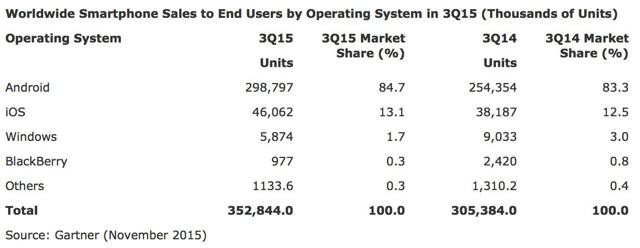
Android and iOS devices now account for 98% of all smartphones shipped.
Microsoft's market share has declined from 3% to 1.7% year on year.
Clearly, it is time for Microsoft to admit that it has lost this battle.
(click to enlarge)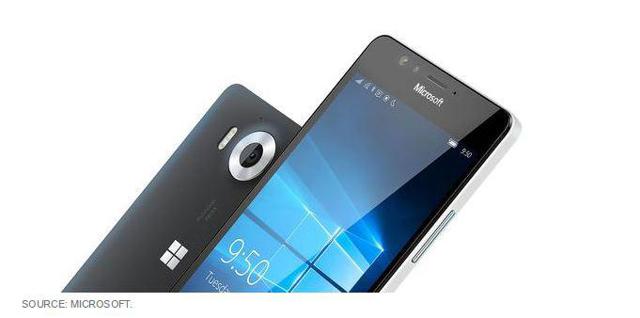
Microsoft (NASDAQ:MSFT) is losing the battle for smartphone market share as Apple (NASDAQ:AAPL) and Alphabet (NASDAQ:GOOG) (NASDAQ:GOOGL) continue to dominate the scene. The most recent figures indicate that iOS and Android devices now account for 98% of the total smartphone market, which puts Microsoft in an increasingly difficult position as it tries to push its windows devices.
According to Gartner, sales of iOS and Android handsets reached an all-time high in the third quarter of this year with the latter shipping about 298.7 million units, while the former shipped 46 million units during the same period. This was in stark contrast to Microsoft, which shipped 5.8 million Windows Phone devices and ceded market share from 3% to 1.7% on a year-on-year basis.
However, Microsoft has been planning a major comeback on the backdrop of the Windows 10 software for mobile, which is supposed to have a number of features, such as support for Universal Windows Apps and Continuum.
Furthermore, Microsoft's shareholders have been banking on the company's Project Astoria tool, which would allow Android developers to port their apps over to the Windows 10 mobile platform to drive migrations to the platform. Now reports from Microsoft indicate that it will be delaying the release of the Project Astoria tool, which has left many investors wondering how this news is going to play out in the long term.
While it isn't clear whether the tech giant has completely shelved the tool, The Verge recently reported that Microsoft was concerned that the Android apps didn't run well enough through Windows and were also less secure. With one of the most highly anticipated features of Windows 10 mobile taking a backseat right when it matters most, I fear that Microsoft has doomed itself to a laggard position in the smartphone race.
More fumbles in the raceMicrosoft has stated that it plans on selling one billion devices (smartphones, tablets, computers) running on the Windows 10 platform over the next three years. Although this goal is highly commendable, I'm of the opinion that the firm should not peg its hope of achieving this goal in large part through mobile sales. This is due to the fact that as it stands, Microsoft has fumbled its mobile strategy and it may be a long while before handsets make a dent on the stated figure.
First, with the launch of the company's two new premium smartphones, the Lumia 950 and 950 XL, most analysts have confirmed their suspicions that Microsoft has given up on the race for the consumer market choosing instead to focus on enterprise customers and I agree with them. Taking the long view on things, this ultimately means that Microsoft's market share in the smartphone industry is headed south, while iOS and Android will continue strengthening their hold.
The reality is that uptake of the new Lumia smartphones is likely to be severely limited to enterprise customers with the Continuum feature being the primary driver for demand as it may offer some cost-saving benefits in that businesses only need to supply their employees with one device that works as a smartphone and a PC.
Also, the fact that Microsoft chose AT&T (NYSE:T) as the exclusive seller of its devices means that the goal of selling one billion devices in three years may need to be revised. Add this to the problems with the launch of Project Astoria tools, the future seems bleaker than before. One thing that deserves some recognition at least is the fact that Windows 10 will allow porting for some iOS apps, which according to reports work better that Android apps.
But still, getting developers to build apps for the Windows 10 mobile platform is proving to be a daunting task, despite the assured compatibility across all devices running the OS. Moreover, as long as Alphabet declines to develop important versions of its leading apps like Gmail and YouTube for Windows 10, the appeal by Microsoft's devices is drastically reduced.
ConclusionWhile it's true that Microsoft is in no way hurting for profits right now, revenue from a larger smartphone market share would have done both shareholders and the firm a lot of good. The debate on whether the Lumia division should take a final bow or not to me is not the issue here as there are plenty of more implications to consider.
As a longtime admirer of the company, I can only hope that Microsoft's push for a bigger piece of the market share will not end up bleeding its cash pile like what happened to Alphabet's attempt in the smartphone hardware business. I believe that shareholders and the management should reconcile with the fact that this ship sailed long ago and whatever the company does right now won't be changing the game in any way.
Seeking Alpha PRO helps fund managers:
For an overview of our products and pricing:
Thank you for your interest in Seeking Alpha PROWe look forward to contacting you shortly for a conversation.
Thank you for your interest in Seeking Alpha PRO
Our PRO subscription service was created for fund managers, and the cost of the product is prohibitive for most individual investors. If you are an investment professional with over $1M AUM and received this message in error, click here and you will be contacted shortly.Thank you for your interest in Seeking Alpha PROWe look forward to contacting you when we have an individual investor product ready!
Already subscribed to PRO? Sign in here
Source: Microsoft Has Lost The Smartphone Battle

No comments:
Post a Comment